SEO Strategy: How to Build a High-Impact SEO Plan That Drives Long-Term Results
Learn how to create an SEO strategy that improves rankings, grows organic traffic, targets the right audience, and delivers long term business growth.

What Is an SEO Strategy?
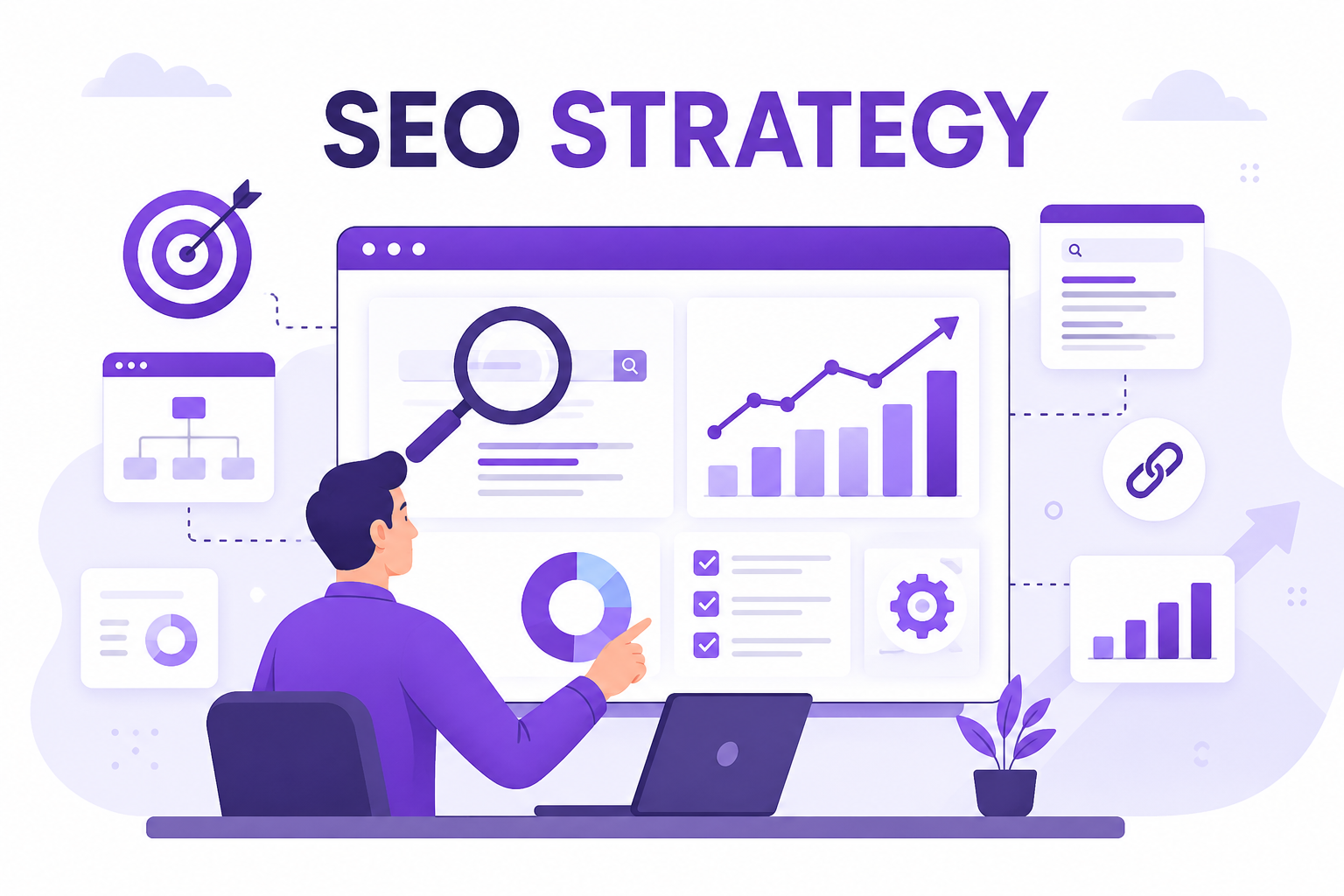
An SEO strategy is a structured plan that improves a website’s visibility in search engines like Google through strategic planning, technical SEO, keyword targeting, and content optimization. It acts as a long-term blueprint for increasing search rankings, organic traffic, and online presence by aligning SEO execution with business goals and user intent.
Unlike random content publishing, strategic SEO focuses on purposeful content creation, website optimization, and audience targeting. It combines technical performance, content strategy, and search demand analysis to attract qualified visitors, improve brand visibility, and build website authority over time.
A strong SEO plan also includes continuous performance tracking, content updates, and adaptive improvements based on search trends and competitive changes. This data-driven approach supports sustainable growth, better lead generation, and measurable business success.
Why SEO Strategy Is Important for Long-Term Growth
Long-Term SEO vs Short-Term Tactics
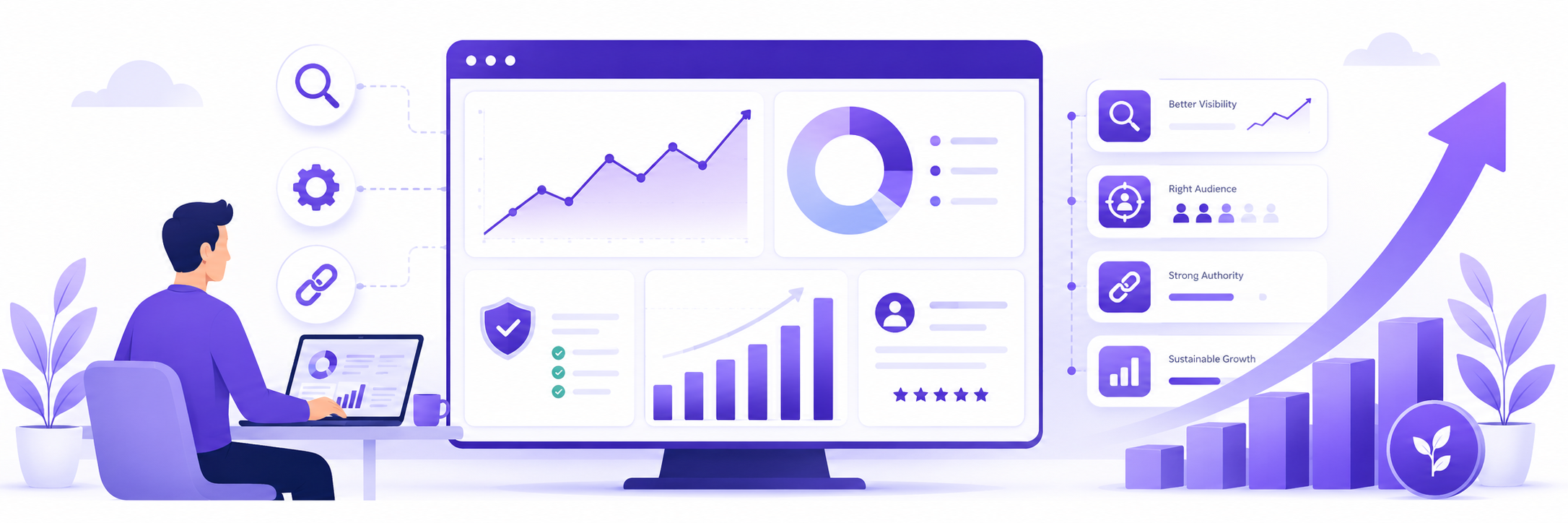
A strong SEO strategy builds a stable digital foundation through technical SEO, content optimization, keyword research, and ethical link-building. It drives sustainable growth by improving search visibility, attracting the right audience, and increasing consistent organic traffic over time. Businesses that invest in long-term SEO create lasting authority, strengthen website trust, and support continuous business growth.
Short-term tactics often chase quick wins through keyword stuffing, spam tactics, or buying backlinks. These methods may deliver temporary traffic boosts, but they often damage search engine trust and create ranking instability. Businesses that rely on manipulative SEO risk penalties, reduced visibility, and weaker long-term results.
How Google Rewards Consistency and Quality
Google rewards websites that consistently publish relevant, helpful, and updated content. Websites that maintain strong technical performance, secure browsing, mobile-friendly design, and clean site structure improve user satisfaction and strengthen search engine trust. Regular content updates and continuous optimization help websites maintain stable rankings and stronger search relevance.
Google also values websites that earn natural backlinks, improve technical SEO, and prioritize user experience. Businesses that follow SEO best practices show reliability and authority, which strengthens their digital credibility and supports lasting rankings.
Business Benefits of Sustainable SEO
Sustainable SEO increases consistent organic traffic, improves lead generation, and reduces dependence on paid advertising. It helps businesses attract active searchers, build customer trust, and improve brand authority. A strong SEO framework supports better conversions by connecting businesses with users actively searching for solutions.
This long-term investment also delivers stronger ROI through reliable traffic growth, higher-quality leads, and lasting online visibility. Businesses that prioritize strategic SEO improve marketing efficiency, strengthen digital authority, and create sustainable profitability.
Core Components of a Successful SEO Strategy
Audience and Search Intent Alignment
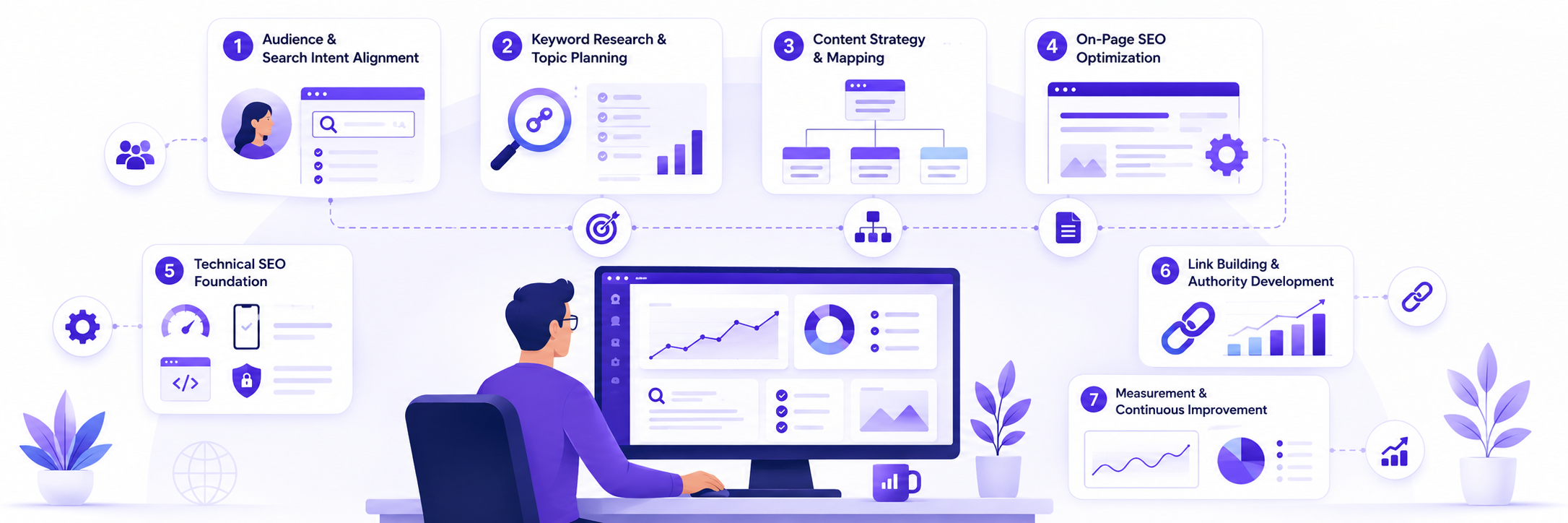
A successful SEO strategy begins with understanding your target audience and aligning content with their search intent. Businesses need to analyze customer behavior, audience insights, and search patterns to understand what users actively seek. This approach helps brands create relevant content that solves real problems, answers customer questions, and improves search satisfaction.
When businesses align content with user needs and customer journeys, they attract qualified traffic, improve engagement, and increase conversions. Strong audience alignment ensures that SEO supports both user expectations and business growth.
Keyword Research and Topic Planning
Keyword research forms the foundation of strategic SEO by identifying relevant search terms, keyword opportunities, and content priorities. Businesses should target keywords based on search volume, competition, business relevance, and user intent to build a stronger ranking strategy.
Topic planning strengthens SEO by grouping related keywords into semantic clusters and topic themes. This structure helps websites build topical authority, improve content relevance, and increase search competitiveness while supporting long-term visibility.
Content Strategy and Mapping
Content strategy turns keyword insights into a structured content ecosystem that supports search visibility and user progression. Businesses should create pillar pages, supporting articles, and strategic internal links that guide users through informative, engaging, and conversion-focused content.
This content mapping strengthens website architecture, improves content organization, and supports scalable SEO growth. A clear content framework also helps search engines understand page relationships and improves ranking potential.
On-Page SEO Optimization
On-page SEO optimization (opens in new tab) improves each page’s ability to communicate clearly with both users and search engines. Businesses should optimize titles, headers, metadata, keywords, image tags, and formatting to strengthen search relevance and user experience.
Strong on-page optimization improves readability, accessibility, and content clarity while supporting better rankings. It also increases opportunities to appear in featured snippets, AI overviews, and other valuable search features.
Technical SEO Foundation
Technical SEO builds the infrastructure that supports search engine crawling, indexing, and website performance. Businesses must optimize site speed, mobile usability, structured data, and crawl efficiency to improve search engine access and remove technical limitations.
A strong technical foundation improves website health, content discoverability, and ranking performance. Without technical SEO, websites often lose visibility even when they produce valuable content.
Link Building and Authority Development
Link building increases website authority by earning credible backlinks that strengthen trust and search relevance. Businesses should focus on creating valuable content, building partnerships, and expanding digital reach to earn backlinks naturally.
Strong authority development improves search rankings, strengthens brand credibility, and supports sustainable SEO success. Ethical link-building (opens in new tab) also protects long-term search performance.
Measurement and Continuous Improvement
SEO requires constant measurement, performance tracking, and strategic refinement. Businesses must monitor rankings, traffic, engagement, and conversions to identify weak spots and uncover new growth opportunities.
Regular content updates, technical improvements, and data-driven optimization help businesses maintain search competitiveness and adapt to algorithm changes. Continuous improvement strengthens SEO performance and supports sustainable long-term growth.
Step-by-Step Process to Build an SEO Strategy
Step 1: Define Your Goals and Target Audience
Identify Business Objectives
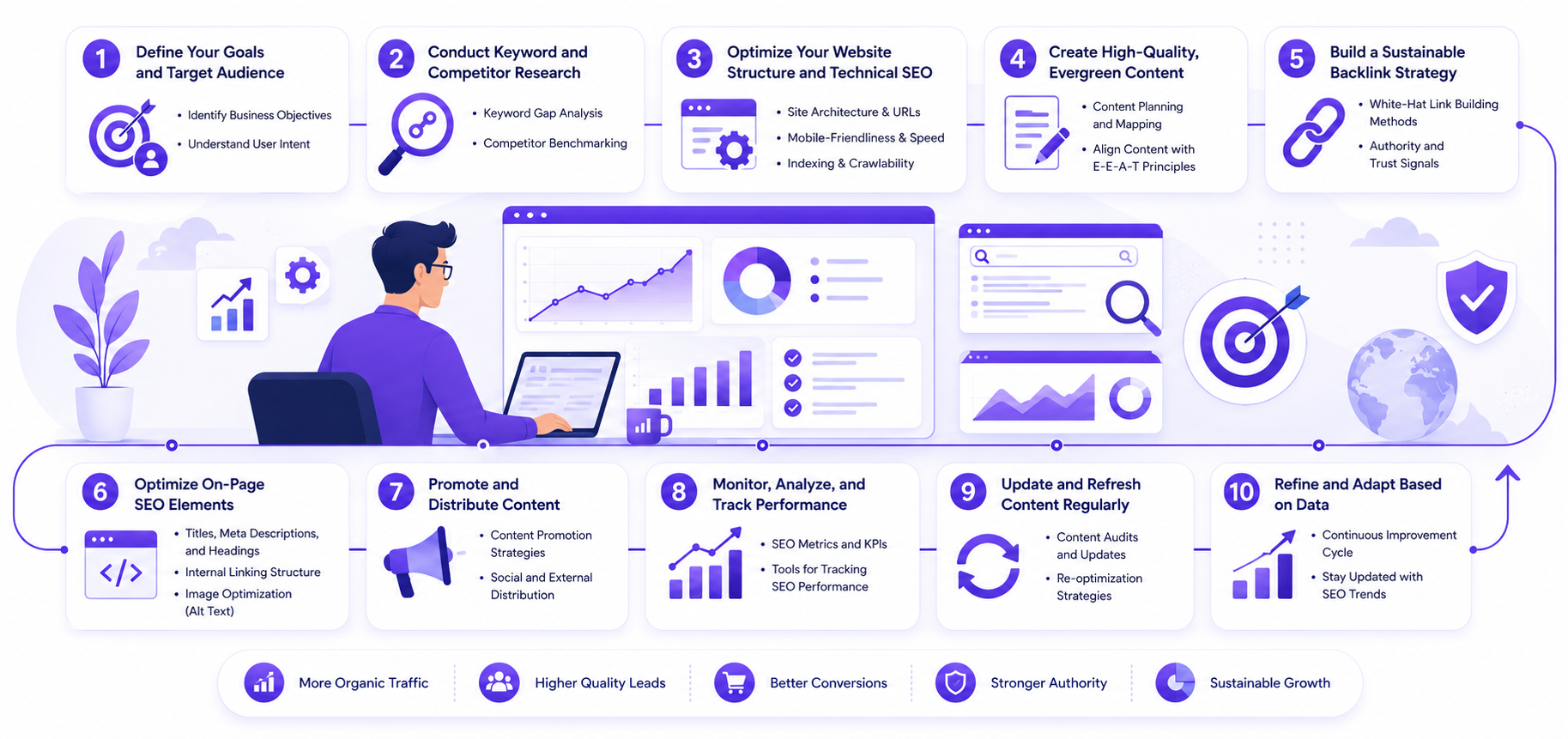
Every effective SEO strategy starts with clear business objectives. Businesses need to define measurable goals such as increasing organic traffic, generating qualified leads, improving conversions, or expanding digital visibility. Clear objectives create strategic focus and help align SEO efforts with broader business growth.
When businesses establish specific KPIs, they improve decision-making and performance tracking. This strategic clarity ensures that every SEO action supports meaningful business outcomes instead of chasing vanity metrics.
Understand User Intent
Understanding user intent allows businesses to align content with what their target audience actively searches for. Brands must analyze search behavior, customer needs, and search queries to identify informational, navigational, or transactional intent.
This alignment improves content relevance, search satisfaction, and conversion potential. Businesses that address real customer problems create stronger engagement and attract more qualified traffic.
Step 2: Conduct Keyword and Competitor Research
Keyword Gap Analysis
Keyword gap analysis identifies valuable search opportunities by comparing your website’s keyword coverage against competitors. This process helps businesses uncover missing keyword opportunities, improve search competitiveness, and strengthen strategic targeting.
By focusing on relevant keywords, long-tail terms, and niche opportunities, businesses build stronger topic authority and improve ranking potential.
Competitor Benchmarking
Competitor benchmarking helps businesses evaluate industry leaders, analyze ranking strategies, and identify performance gaps. Reviewing competitor content, backlink profiles, and keyword rankings reveals practical opportunities for SEO improvement.
This process strengthens SEO planning by helping businesses refine their approach and develop a more competitive digital strategy.
Step 3: Optimize Your Website Structure and Technical SEO
Site Architecture and URLs
A clear website structure improves user navigation and search engine crawling. Businesses should create logical site architecture, optimized URLs, and organized internal linking structures that improve accessibility and search engine communication.
Strong architecture supports better indexing, enhances user experience, and increases overall website authority.
Mobile-Friendliness and Speed
Fast loading speeds and mobile-friendly design directly impact SEO performance and user satisfaction. Businesses must optimize website speed, mobile usability, and technical performance to meet search engine standards.
Mobile optimization improves search rankings, reduces bounce rates, and supports better engagement across devices.
Indexing and Crawlability
Search engines need efficient access to website content through proper crawlability and indexing. Businesses should maintain XML sitemaps, robots.txt files, and structured technical SEO (opens in new tab) practices to ensure discoverability.
Resolving crawl errors and indexing issues strengthens search visibility and improves overall SEO readiness.
Step 4: Create High-Quality, Evergreen Content
Content Planning and Mapping
Strategic content planning transforms keyword research into structured content creation. Businesses should develop content roadmaps that include pillar pages, supporting articles, and conversion-focused pages.
Content mapping strengthens website structure, improves topic coverage, and supports scalable SEO growth.
Align Content with E-E-A-T Principles (opens in new tab)
High-quality content must demonstrate experience, expertise, authority, and trustworthiness. Businesses should prioritize accurate information, valuable insights, and user-focused content that builds credibility.
Strong E-E-A-T alignment improves content authority, search trust, and long-term ranking stability.
Step 5: Build a Sustainable Backlink Strategy
White-Hat Link Building Methods
Sustainable backlink strategies rely on ethical SEO practices such as guest posting, digital PR, industry partnerships, and shareable content creation. Businesses should focus on earning natural backlinks from credible sources.
White-hat link building strengthens website authority while protecting long-term SEO performance.
Authority and Trust Signals
Search engines evaluate websites based on trust signals such as secure browsing, quality backlinks, accurate content, and brand credibility. Businesses must consistently strengthen these authority signals.
Improved trust signals support better rankings, stronger search authority, and lasting digital credibility.
Step 6: Optimize On-Page SEO Elements
Titles, Meta Descriptions, and Headings
On-page SEO begins with optimizing titles, meta descriptions, and headings for clarity and relevance. Businesses should integrate primary keywords naturally while maintaining user readability.
Well-optimized elements improve click-through rates, search relevance, and ranking support.
Internal Linking Structure
Internal links help users navigate content while strengthening search engine understanding of website hierarchy. Businesses should connect related pages strategically to improve authority distribution and user journeys.
A strong internal linking structure supports better indexing and enhanced content performance.
Image Optimization (Alt Text)
Optimized images improve accessibility, user experience, and search engine communication. Businesses should use descriptive alt text, compressed files, and relevant image optimization practices.
Proper image SEO enhances page speed and contributes to stronger overall on-page performance.
Step 7: Promote and Distribute Content
Content Promotion Strategies
Content promotion expands reach beyond organic discovery. Businesses should distribute content through email marketing, digital PR, and strategic partnerships to increase visibility.
Effective promotion accelerates traffic growth and strengthens content authority.
Social and External Distribution
Social media, external platforms, and industry communities amplify content reach and audience engagement. Businesses should leverage multiple marketing channels to improve digital presence.
Broader distribution increases brand awareness and creates additional backlink opportunities.
Step 8: Monitor, Analyze, and Track Performance
SEO Metrics and KPIs
SEO performance depends on measurable metrics such as organic traffic, keyword rankings, conversions, CTR, and engagement. Businesses must monitor these KPIs consistently.
Performance tracking helps businesses measure SEO effectiveness and identify strategic growth opportunities.
Tools for Tracking SEO Performance
Reliable SEO tools such as Google Search Console (opens in new tab), Google Analytics (opens in new tab), Ahrefs, and SEMrush provide critical data for optimization. Businesses should use these tools to monitor rankings, technical health, and content performance.
Data-driven SEO supports smarter strategy refinement and continuous improvement.
Step 9: Update and Refresh Content Regularly
H4: Content Audits and Updates
Regular content audits help businesses identify outdated pages, weak content, and missed opportunities. Updating existing content improves relevance, freshness, and ranking stability.
Consistent maintenance strengthens content performance and supports sustainable SEO.
Re-optimization Strategies
SEO requires continuous re-optimization based on performance data, search trends, and algorithm updates. Businesses should refine keywords, improve structure, and enhance underperforming content regularly.
This proactive approach protects rankings and drives long-term search growth.
Step 10: Refine and Adapt Based on Data
Continuous Improvement Cycle
SEO strategy requires ongoing analysis, testing, and refinement. Businesses should consistently evaluate performance data, optimize weak areas, and adapt strategies for stronger results.
Continuous improvement supports sustainable growth, ranking consistency, and digital competitiveness.
Stay Updated with SEO Trends
Search engine algorithms, user behavior, and search trends evolve constantly. Businesses must stay informed about SEO updates, emerging opportunities, and industry best practices.
Strategic adaptability ensures long-term SEO success and protects digital authority
SEO Content Strategy (Deep Dive)
Topic Clustering and Content Mapping
A strong SEO content strategy organizes content into strategic topic clusters that connect pillar pages, supporting articles, landing pages, and digital assets around shared search intent. This structured content ecosystem improves semantic relevance, strengthens authority building, and helps businesses achieve long-term visibility instead of relying on isolated pages or temporary traffic spikes.
- Build pillar content around core business topics
- Support pillars with related blog posts and subtopics
- Align content with audience needs and search goals
- Strengthen internal linking for better content connectivity
- Prioritize scalable content for sustainable growth
Information Architecture and UX
Effective information architecture improves both user experience and search engine understanding by creating clear site structures, intuitive navigation, and accessible content pathways. Businesses that combine SEO with user-centric design improve content discoverability, search performance, and engagement while strengthening trust signals.
- Use logical page hierarchies and structured menus
- Improve website speed and mobile usability
- Strengthen internal linking and crawlability
- Simplify layouts for better readability
- Enhance user satisfaction through seamless navigation
SEO Workflow and Process
Successful SEO execution depends on consistent workflows that guide content planning, optimization, publishing, promotion, and performance analysis. A structured SEO process helps businesses maintain quality, improve efficiency, and continuously refine strategy based on measurable results.
- Conduct keyword research and strategic planning
- Create optimized content with publishing consistency
- Track SEO metrics and performance benchmarks
- Update and refresh content regularly
- Adapt strategy based on search trends and data
Essential SEO Strategy Tools
Keyword Research and Planning Tools
Strong SEO strategies depend on accurate keyword research and strategic planning tools that reveal search demand, competitor gaps, and audience behavior. These platforms help businesses uncover keyword opportunities, improve content prioritization, and build data-driven SEO roadmaps.
- Google Keyword Planner for keyword discovery and search volume
- Ahrefs for competitor analysis and backlink research
- Semrush for keyword gaps and strategic SEO planning
- Google Trends for search trend analysis
- Siteimprove for content quality and optimization insights
On-Page Optimization Tools
On-page SEO tools improve content quality, keyword integration, technical compliance, and readability during content production. These tools help businesses optimize pages for better rankings while maintaining scalable publishing workflows.
- Yoast SEO for WordPress optimization and readability checks
- Rank Math for advanced on-page SEO management
- MarketMuse for content briefs and topic depth
- Google Docs SEO add-ons for writing optimization
- Notion or Contentful for editorial planning and workflow management
Performance Monitoring Tools
Performance monitoring tools track rankings, traffic, conversions, and SEO effectiveness through measurable data. Businesses use these platforms to monitor growth, identify weak areas, and refine strategy continuously.
- Google Search Console for indexing, rankings, and search insights
- Google Analytics for traffic and user behavior analysis
- Databox for customizable SEO dashboards
- Ahrefs and Semrush for ranking performance tracking
- PageSpeed Insights (opens in new tab) for technical performance and speed monitoring
Common SEO Strategy Mistakes to Avoid
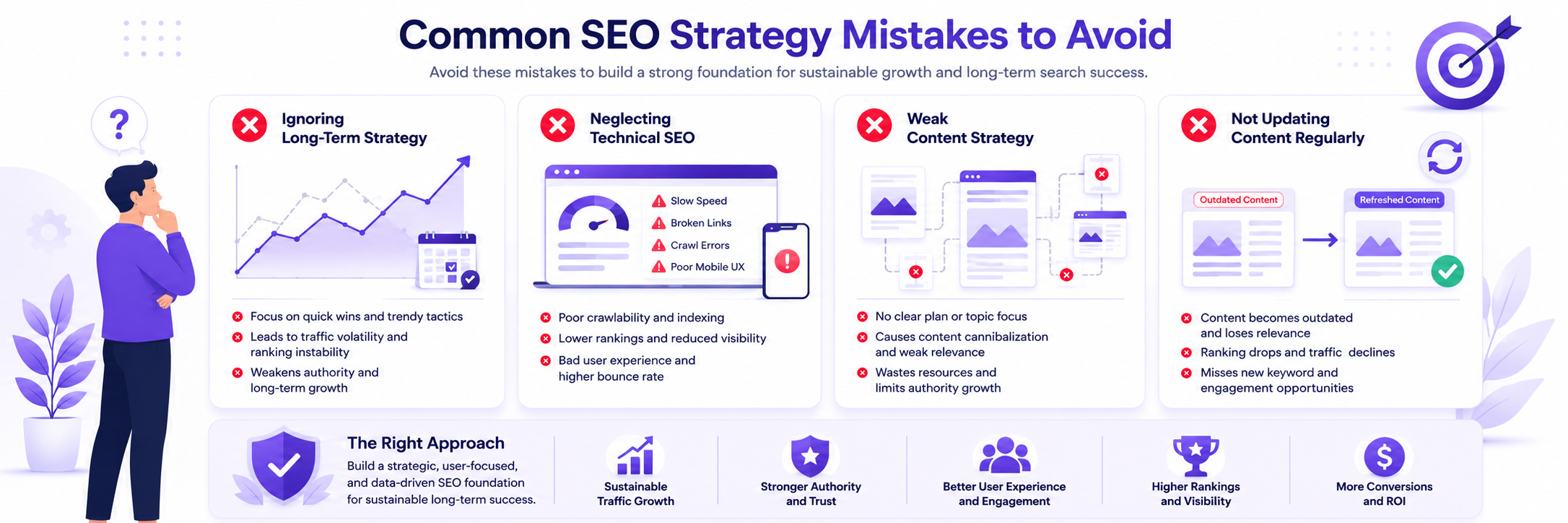
Ignoring Long-Term Strategy
Many businesses prioritize short-term SEO tactics instead of building a sustainable strategy. They often chase quick traffic spikes through trendy tactics or SEO shortcuts that fail to create lasting authority.
This short-term mindset weakens ranking stability and creates traffic volatility. Businesses may see temporary gains, but they often lose visibility when search trends or algorithms change.
A strong long-term SEO strategy builds authority, trust, and sustainable growth. Strategic planning improves traffic reliability, strengthens digital presence, and supports consistent business scalability.
Neglecting Technical SEO
Technical SEO problems can quietly damage search performance. Slow page load times, broken links, crawl errors, and poor mobile usability reduce website effectiveness.
Without proper technical optimization, search engines struggle to crawl and index content efficiently. These barriers lower rankings, weaken user experience, and limit visibility.
Businesses that maintain technical SEO through audits, site speed optimization, and structured data improvements create stronger website health, better crawlability, and long-term ranking resilience.
Weak Content Strategy
A weak content strategy often produces fragmented content that lacks direction, purpose, or search intent alignment. Random publishing reduces content effectiveness and limits authority growth.
Poor keyword planning, weak topic prioritization, and disconnected pages can also cause content cannibalization and lower ranking potential. Businesses may waste resources on content that fails to perform.
Strategic content planning strengthens topic coverage, authority building, and search relevance. A structured content ecosystem supports user needs while improving conversions and long-term SEO success.
Not Updating Content Regularly
Outdated content gradually loses relevance as search trends, user behavior, and competitor strategies evolve. Businesses that ignore content maintenance often experience ranking declines.
Content decay weakens authority, reduces traffic retention, and lowers search trust. Older pages may also miss new keyword opportunities or fail to meet current search expectations.
Regular content audits, updates, and re-optimization preserve content freshness and improve long-term performance. Ongoing content maintenance strengthens rankings, traffic sustainability, and SEO competitiveness.
Future of SEO Strategy
AI and Generative Search
Future SEO strategy will require businesses to adapt to generative search, semantic SEO, and evolving search technologies that prioritize contextual relevance over simple keyword targeting. Businesses must focus on strategic content planning, authority building, and search intent alignment to remain competitive.
AI-powered tools also improve SEO efficiency through faster research, keyword clustering, and workflow automation. Businesses that combine automation with strategic oversight will strengthen content quality, search relevance, and long-term digital authority.
Conversational and Voice Search
Conversational and voice search continue to reshape user behavior by increasing demand for natural language content and direct answers. Users now search with full questions, which makes question-based content and conversational optimization essential.
Businesses that optimize for voice search improve content accessibility, search responsiveness, and audience engagement. Strong conversational SEO helps brands stay aligned with changing user expectations and search patterns.
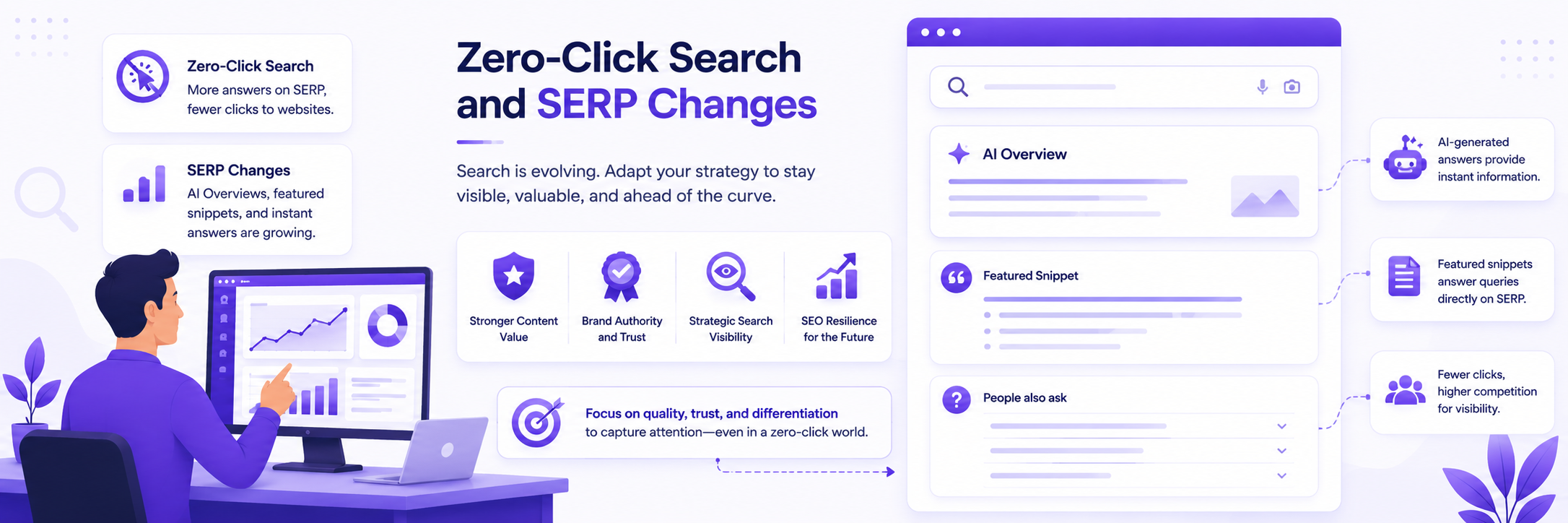
Zero-Click Search and SERP Changes
Zero-click search features such as AI-generated answers and featured snippets continue to reduce traditional click-through opportunities. Businesses must adapt by strengthening content value, brand authority, and strategic search visibility.
To maintain traffic sustainability, businesses need differentiated content, stronger trust signals, and SEO resilience. Strategic adaptation helps brands retain audience attention even as search engine results continue evolving.
Frequently Ask Questions
Conclusion: Build a Scalable SEO Strategy for Long-Term Success
A scalable SEO strategy combines strategic planning, technical SEO, content optimization, and audience targeting to drive long-term search visibility and sustainable business growth. Businesses that build strong SEO infrastructure improve website authority, ranking consistency, and digital presence over time.
Long-term success depends on continuous optimization, strategic publishing, and data-driven improvements. Brands that prioritize sustainable SEO create steady traffic growth, stronger search authority, and measurable business success.
Muhammad Yousaf
Jam SEO Agency
Leads JamSEO Agency vision, growth, and client success through data driven SEO and digital strategy.