What Is Google E-E-A-T? Complete Guide to Experience, Expertise, Authority & Trust
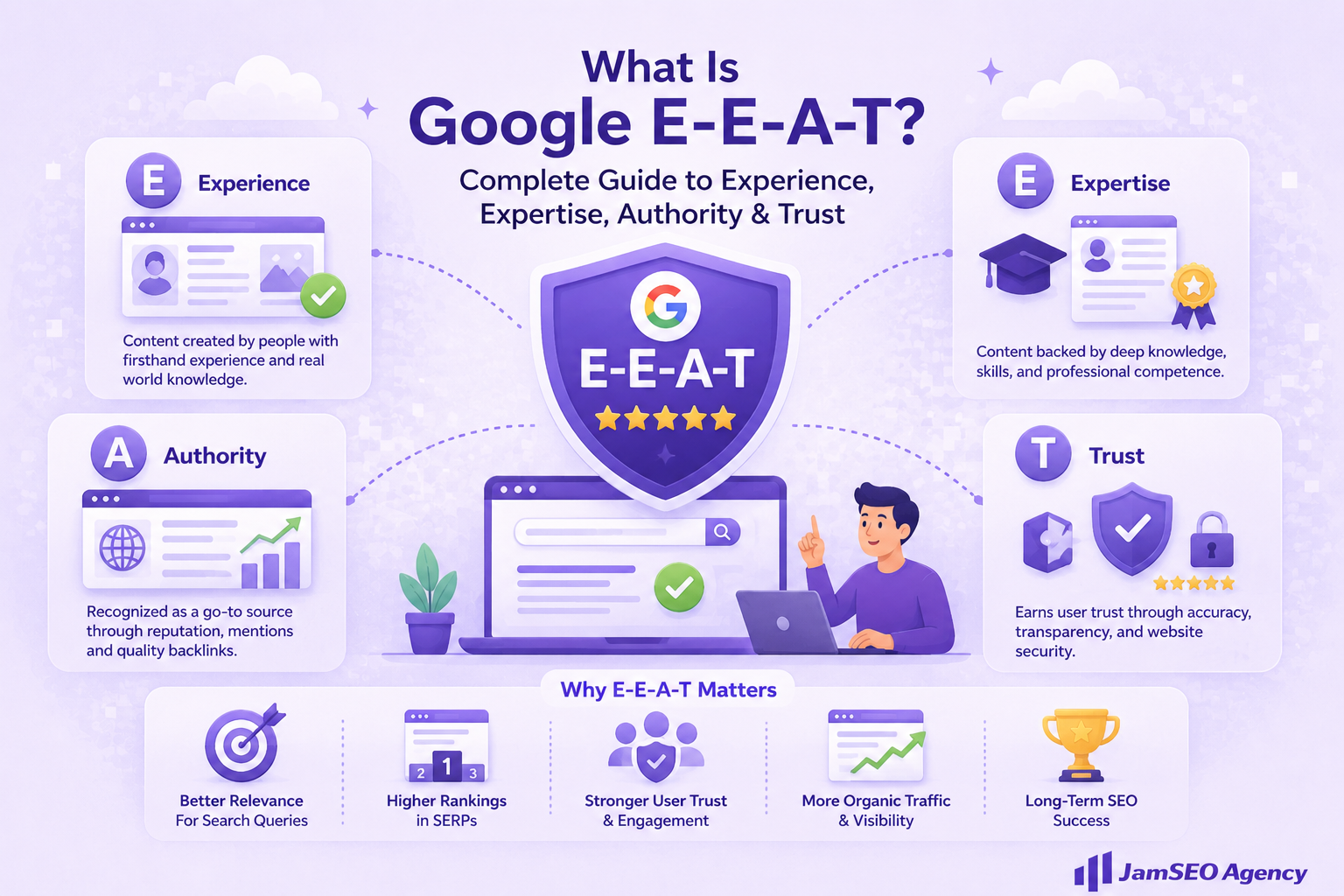
What is E-E-A-T? Google E-E-A-T stands for Experience, Expertise, Authoritativeness, and Trustworthiness. It is a quality evaluation framework used by Google to assess how reliable, accurate, and useful your content is for users, especially for topics that impact health, finances, or safety.

What Is Google E-E-A-T?
Google E-E-A-T is a content quality framework used by Google to assess how trustworthy and useful a webpage is. It stands for Experience, Expertise, Authoritativeness, and Trustworthiness, evolving from the original E-A-T model with the addition of “Experience” in 2022. This shift highlights the importance of first-hand knowledge, meaning content created from real-world use or direct involvement carries more credibility. The concept is defined in the Search Quality Rater Guidelines (opens in new tab), where human raters evaluate pages based on how well they meet user needs and provide accurate information.
E-E-A-T is not a direct ranking signal, but it strongly influences how Google’s algorithms measure content quality. It is especially critical for YMYL (opens in new tab) topics like health, finance, and safety, where trust and accuracy directly impact users. Websites that demonstrate real experience, clear expertise, and reliable information tend to perform better, while low-quality or generic content struggles to rank in competitive search results.
What Does E-E-A-T Mean in SEO?
In SEO, E-E-A-T explains how Google evaluates whether content deserves to rank. It focuses on who creates the content, how reliable the information is, and whether it genuinely helps users. This framework comes from the Search Quality Rater Guidelines and guides both human raters and algorithm improvements. While it is not a direct ranking factor, aligning with E-E-A-T principles improves overall content quality, which indirectly strengthens search performance.
Experience (First-Hand Knowledge)
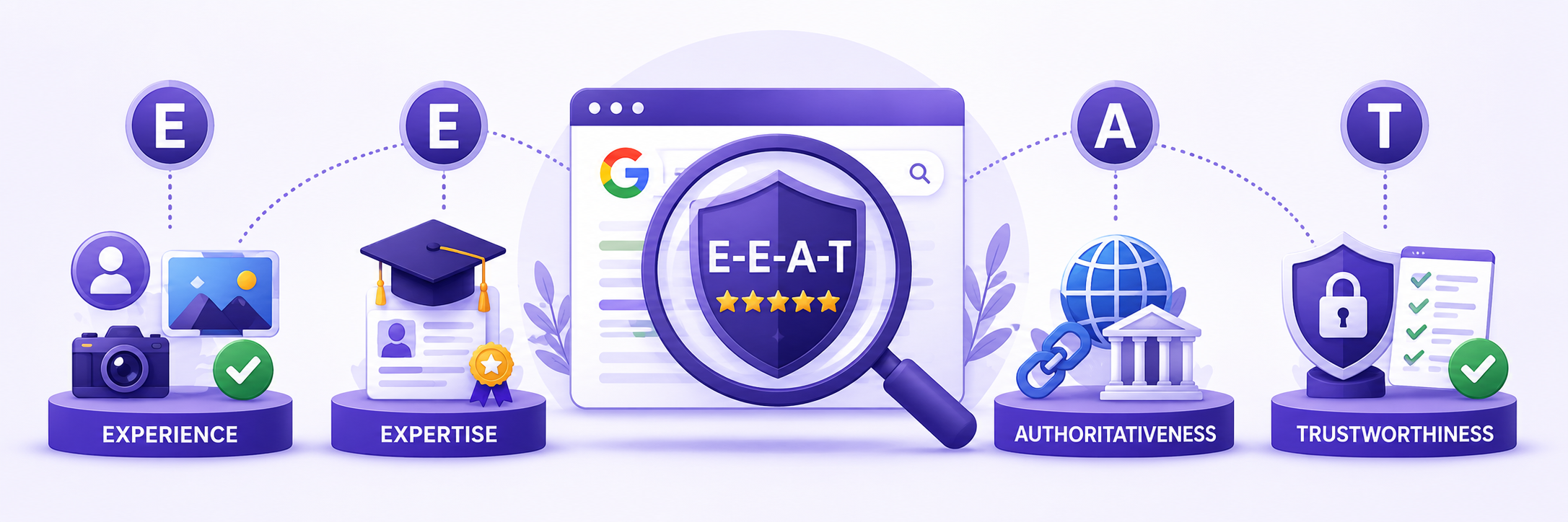
Experience measures whether the content creator has actually lived or used what they are talking about. Google values real-world involvement because it produces authentic insights that generic content cannot match. For example, a product review with original photos or a travel guide with personal observations signals real experience. This approach reduces recycled content and rewards unique, practical knowledge that users can trust.
Expertise (Subject Knowledge)
Expertise focuses on the creator’s knowledge and skill in a specific topic. For technical or YMYL topics like health or finance, Google expects content from qualified professionals or well-informed individuals. A medical article reviewed by a licensed doctor or a financial guide written with proven strategies demonstrates strong expertise. For non-critical topics, consistent, high-quality content in a niche can also build recognized expertise over time.
Authoritativeness (Industry Reputation)
Authoritativeness reflects how well a website or creator is recognized as a reliable source in their field. It grows through mentions, backlinks, and associations with trusted platforms like The New York Times or BBC. When other authoritative sites reference your content, it signals credibility to search engines. Strong authority positions a site as a go-to resource within its niche.
Trustworthiness (Credibility & Safety)
Trust is the most critical part of E-E-A-T. It ensures content is accurate, honest, and safe for users. Google looks for clear signals like HTTPS security, transparent contact details, accurate citations, and fair information. For example, platforms like Federal Trade Commission (opens in new tab)-authorized services or reputable sources like TechCrunch build higher trust. Without trust, even experienced or authoritative content struggles to rank.
What’s the Difference Between E-E-A-T and E-A-T?
Evolution from E-A-T to E-E-A-T
E-A-T was introduced as part of Google’s quality guidelines to help human raters evaluate search results. Over time, it became a central standard influencing algorithm improvements and systems like the Helpful Content System. In December 2022 (opens in new tab), Google expanded E-A-T into E-E-A-T by adding “Experience,” signaling a stronger focus on authentic, user-first content. This evolution aligns with major updates, including the March 2024 Core Update (opens in new tab), which targeted low-value, mass-produced content and rewarded content that demonstrates real insight and usefulness.
Why Experience Was Added
Google added Experience to address a key gap in content quality evaluation. Many pages showed expertise but lacked proof of real use or involvement. By emphasizing first-hand experience, Google can better identify content that offers practical value. For example, a product review written by someone who has actually used the product is more trustworthy than one based only on research. This change helps reduce generic content, strengthens trust signals, and ensures that content ranking in search results delivers genuine, experience-backed insights.
Why E-E-A-T Matters for SEO
E-E-A-T matters for SEO because it helps Google prioritize content that is reliable, useful, and created for real people. It influences how search systems evaluate quality, even if it is not a direct ranking signal. Pages that demonstrate real experience, strong expertise, and clear trust signals tend to rank higher and stay visible in competitive search results. In contrast, low-quality or generic content often loses visibility over time.
Impact on Rankings and Visibility
E-E-A-T directly affects how content performs in search results. Websites that show clear expertise and authority are more likely to appear for competitive queries. Strong signals like accurate information, credible authors, and trusted references improve rankings and click-through rates. On the other hand, weak or unverified content reduces trust and leads to lower positions in search engine results pages.
Role in Google Helpful Content System
E-E-A-T aligns closely with Google’s Helpful Content System, which rewards content written for users rather than search engines. This system identifies low-value, mass-produced pages and reduces their reach. Content that demonstrates first-hand experience, solves real problems, and delivers clear value is more likely to perform well. Updates like the March 2024 Core Update reinforced this by targeting scaled content abuse and prioritizing authentic, people-first content.
Importance for YMYL (Your Money or Your Life) Sites
E-E-A-T is critical for YMYL topics such as health, finance, and safety. In these areas, inaccurate information can harm users, so Google applies stricter quality standards based on the Search Quality Rater Guidelines. High E-E-A-T content in these niches often includes expert-reviewed information, verified credentials, and transparent sources. Websites that fail to demonstrate trust and accuracy in YMYL topics struggle to rank, regardless of other SEO efforts.
How Google Evaluates E-E-A-T
Quality Rater Guidelines Overview
Quality Raters analyze content using defined rating levels, from Lowest to Very High E-E-A-T. Pages receive low ratings if they show misinformation, lack expertise, or come from untrustworthy sources. High-quality pages demonstrate strong credibility, clear purpose, and real value for users. For example, a YMYL page with inaccurate advice or no expert input can receive the lowest rating, while a page with verified knowledge and strong reputation earns a high rating.
“Who, How, and Why” Content Evaluation Framework
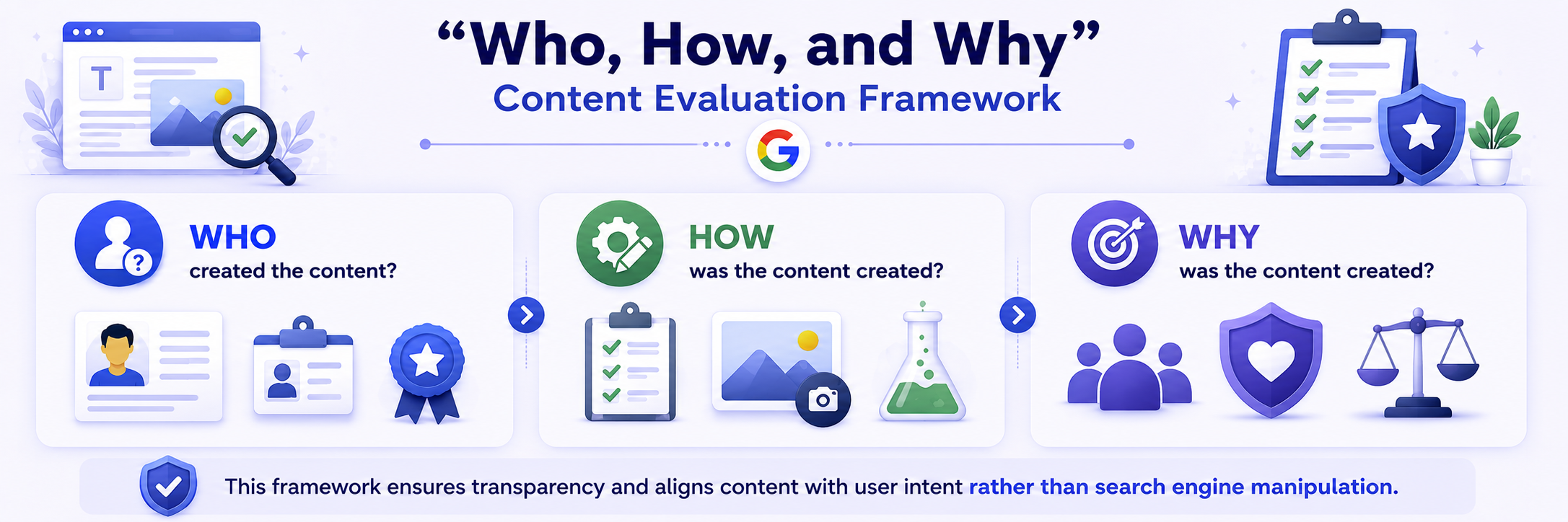
Google encourages evaluating content using three key questions:
- Who created the content? Clear authorship, bylines, and author background build trust
- How was the content created? Evidence like testing, original images, or real experience shows effort and authenticity
- Why was the content created? Content should help users, not manipulate search rankings
This framework ensures transparency and aligns content with user intent rather than search engine manipulation.
Signals Google Uses (Links, Mentions, Content Quality)
Google’s systems look for measurable signals that reflect E-E-A-T in practice. These include:
- High-quality backlinks and mentions from trusted websites
- Strong content quality with originality, accuracy, and depth
- Positive reputation across the web and consistent niche authority
Pages that combine these signals with real experience and expertise are more likely to rank well, especially after major algorithm updates (opens in new tab) that target low-value or AI-generated content without clear human value.
E-E-A-T Signals Explained
E-E-A-T signals are the practical indicators Google uses to judge whether content is reliable, helpful, and worth ranking. These signals combine on-page quality, off-page authority, and user trust factors. They help search systems identify content that genuinely serves user intent.

Content Quality and Depth
Content quality is the strongest E-E-A-T signal. High-performing pages provide comprehensive, well-structured, and accurate information that fully answers search intent. This includes:
- Clear structure with headings and scannable sections
- Original insights, examples, or case-based explanations
- Up-to-date, fact-checked, and semantically relevant content
Pages that demonstrate depth and real value improve engagement metrics like dwell time and reduce bounce rates.
Backlinks and Brand Mentions
Backlinks and mentions act as external proof of authority. When trusted websites reference your content, it signals credibility to search engines. Strong backlink signals include:
- Links from relevant, high-authority domains
- Natural, editorial, and contextual backlinks
- Consistent brand mentions, even without links
A diverse and high-quality backlink profile strengthens domain authority and improves search visibility.
Author Credentials and Transparency
Google evaluates who is behind the content. Clear authorship builds trust and supports expertise signals. Effective transparency includes:
- Detailed author bio with experience and qualifications
- Real identity with professional profiles or publications
- Clear contact information and editorial accountability
Content created by recognized experts or experienced individuals is more likely to rank, especially in competitive niches.
User Experience and Site Trust Signals
User experience directly supports trust and credibility. A secure, fast, and easy-to-use website reinforces E-E-A-T. Key signals include:
- HTTPS security and data protection measures
- Fast loading speed and mobile-friendly design
- Clear navigation, clean UI, and accessible layout
Positive UX signals improve user satisfaction, which indirectly supports better rankings and long-term SEO performance.
The Four Pillars of E-E-A-T (Deep Dive)
Experience: Real-World Usage and Case Studies
Experience focuses on real-world involvement and first-hand knowledge. Content becomes more credible when creators share authentic stories, case studies, and practical lessons. For example, creators like Thomas Sanladerer build trust by personally testing products and showing proof through images or videos. Similarly, platforms like Wirecutter demonstrate experience through detailed testing and real usage scenarios.
Google values this type of content because it reflects genuine interaction, not secondhand knowledge. Pages that include personal insights, product trials, and documented outcomes consistently perform better as they align with how users evaluate trust.
Expertise: Demonstrating Knowledge and Skills
Expertise measures how well a creator understands a subject and communicates it clearly. High-quality content often includes verified credentials, in-depth explanations, and references to authoritative sources. For example, Healthline strengthens expertise by having medical professionals review and update content regularly.
Expertise also varies by topic. YMYL topics require formal qualifications, while non-YMYL niches can rely on demonstrated skills and consistent publishing. Tools and insights from Ahrefs highlight how expertise builds over time through topical depth and structured content. The key is to show both knowledge and the ability to solve real user problems.
Authoritativeness: Building Industry Recognition
Authoritativeness reflects how others perceive your credibility. It grows when reputable sources reference your content, link to your site, or mention your brand. For instance, companies like Tesla hold authority in specific industries because they are widely recognized and cited. Similarly, backlinks and mentions from trusted publications such as Search Engine Journal signal strong authority.
SEO tools like Moz Link Explorer help analyze backlink profiles and compare authority against competitors. Consistent recognition through PR, guest contributions, and original research strengthens this pillar.
Trustworthiness: Security, Accuracy, and Transparency
Trustworthiness is the foundation of E-E-A-T and determines whether content deserves visibility. A trustworthy site provides accurate, well-researched information and ensures user safety through secure systems like HTTPS. Clear policies, contact details, and transparent disclosures further strengthen trust.
For example, platforms like Costco build credibility through strong customer support and transparent communication. Google prioritizes content that is honest, up to date, and backed by reliable sources. Without trust, even experienced, expert, or authoritative content struggles to rank effectively.
How to Improve E-E-A-T (Step-by-Step Process)
Improving E-E-A-T requires a consistent, site-wide approach that strengthens content quality, credibility, and trust. Google evaluates these factors together, so isolated fixes rarely work. The goal is to create content that genuinely helps users while clearly showing who created it and why it can be trusted.
Create Helpful, People-First Content
Focus on solving real problems instead of chasing keywords. Build content around search intent and provide clear, useful answers with original insights, examples, or data. Regular updates keep content relevant and aligned with current trends.
SEO Content Writing Service
We provide Semantically SEO Optimized Content.
Showcase Author Credentials and Expertise
Make authorship visible and credible. Add detailed author bios that explain experience, qualifications, and subject knowledge. Linking to professional profiles or past work strengthens authority and helps users trust the information.
Use Credible and Authoritative Sources
Support your content with reliable references. Linking to recognized publications, research, or expert opinions improves accuracy and reinforces trust. This also helps position your content as well-researched and dependable.
Build High-Quality Backlinks
Authority grows when trusted websites mention or link to your content. Earning links through outreach, PR, and guest contributions signals credibility and improves your overall domain strength in search.
Add Real Experience (Case Studies, Examples)
Include first-hand insights wherever possible. Case studies, real results, and practical examples show that your content is based on actual experience, not just theory. This is especially important after the addition of “Experience” in E-E-A-T.
Collect Reviews and Testimonials
User feedback builds social proof and trust. Positive reviews, testimonials, and real user experiences show that your brand delivers value. Monitoring platforms like Trustpilot (opens in new tab) or Reddit also helps manage your online reputation.
Maintain Technical Trust Signals (HTTPS, UX)
A secure and smooth user experience supports credibility. Use HTTPS, ensure fast loading speeds, and create a mobile-friendly, easy-to-navigate site. Strong UX signals improve user satisfaction and reinforce trust.
Technical SEO Service
We Provide Technical Seo Services to boost your website presence in SERP.
Update Content Regularly
Keep content fresh and accurate. Regular audits help identify outdated or low-quality pages that need improvement or removal. Updating content with new data and insights ensures it remains competitive and valuable over time.
E-E-A-T and AI-Generated Content
AI-generated content has become a major part of modern SEO, but its success still depends on E-E-A-T principles. Google does not penalize content simply because AI helped create it. Instead, it evaluates whether the content is useful, accurate, and created for people. This means AI content can rank well, but only when it demonstrates real value, credibility, and aligns with quality guidelines.
Google’s Stance on AI Content
Google’s position is clear: it rewards high-quality content regardless of how it is produced. AI-assisted content is acceptable as long as it meets user intent and provides helpful information. However, content created purely to manipulate rankings or mass-produce low-value pages can be demoted. Updates like the March 2024 Core Update reinforced this by targeting scaled, unhelpful content.
Can AI Demonstrate Experience and Expertise?
AI can generate well-structured and informative content, but it cannot provide true first-hand experience. It relies on training data, not real-world interaction. This limits its ability to demonstrate genuine experience, especially for topics like product reviews or personal insights. Expertise can be simulated, but without human validation, it lacks credibility. Strong E-E-A-T requires human input to add real knowledge, context, and accuracy.
Risks of Low-Quality AI Content
Low-quality AI content often lacks originality, depth, and accuracy. It can introduce factual errors, outdated information, or generic insights that add no value. In sensitive areas like health or finance, this creates serious risks and reduces trust. Google’s systems actively detect and devalue such content, especially when it shows no clear expertise or authority.
How to Use AI While Maintaining E-E-A-T
AI works best as a support tool, not a replacement for human expertise. Content creators should use AI for research, outlining, or drafting, then refine it with real insights and verification. Human review is essential to fact-check information, add personal experience, and ensure accuracy. Combining AI efficiency with human expertise creates content that meets E-E-A-T standards and performs well in both traditional and AI-driven search results.
Does E-E-A-T Affect AI Overviews and AI Search?
E-E-A-T directly influences how content appears in AI-powered search experiences. Google uses the same quality principles for traditional rankings and newer features like AI Overviews and AI Mode. This means content must still demonstrate experience, expertise, authority, and trust to be selected as a reliable source for AI-generated answers.

E-E-A-T in AI Search Results
AI Overviews do not pull content randomly. They prioritize sources that already perform well in search and show strong E-E-A-T signals. Studies indicate that a large percentage of AI Overview citations come from pages ranking in the top search results, suggesting that traditional authority and credibility still drive visibility. Content with strong backlinks, brand mentions, and proven expertise is more likely to be referenced in AI summaries.
Impact on Generative Search Engines
Generative search systems rely on trusted data to produce accurate answers. They favor well-known and reputable sources because these signals reduce the risk of misinformation. Websites with strong brand authority, consistent mentions, and high-quality content stand out more in AI-driven results. As search evolves, E-E-A-T becomes even more important because it determines not just rankings, but also whether your content gets selected and cited in AI-generated responses.
Is E-E-A-T a Ranking Factor?
E-E-A-T is not a direct ranking factor in Google, but it strongly influences how content performs in search. Google does not assign a fixed “E-E-A-T score” to pages. Instead, it uses this framework to guide how its systems evaluate quality and usefulness. As Danny Sullivan (opens in new tab) explained, E-E-A-T is not something algorithms can measure like page speed. Rather, Google looks for signals that act as proxies for experience, expertise, authority, and trust.
Direct vs Indirect Ranking Influence
E-E-A-T works indirectly through Google’s ranking systems. Human quality raters assess content using E-E-A-T principles, and their feedback helps improve algorithms over time. These systems then learn to identify patterns that match high-quality content. So while E-E-A-T itself is not a ranking factor, it shapes the signals that algorithms rely on to rank pages.
Correlation with Ranking Signals
Pages that demonstrate strong E-E-A-T tend to perform better because they align with measurable signals. These include high-quality backlinks, accurate and in-depth content, strong brand reputation, and positive user engagement. Google uses these signals as indicators of trust and authority. As a result, improving E-E-A-T increases the likelihood of ranking higher, even without being a direct ranking factor.
Can You Measure E-E-A-T?
E-E-A-T cannot be measured with a single score because Google does not provide an official metric. Instead, it evaluates quality using multiple signals that act as proxies for experience, expertise, authority, and trust. This means you must assess E-E-A-T indirectly by analyzing measurable indicators that reflect credibility and performance.
Backlinks as a Measurement Signal
Backlinks are one of the strongest indicators of authoritativeness. When reputable websites link to your content, it signals trust and relevance. Links from high-quality, topic-related domains carry more weight than random or low-quality links. Tools like Ahrefs Site Explorer help analyze backlink profiles, including referring domains, anchor text, and link quality, which together act as a proxy for authority.
Off Page SEO
We provide Niche Relivant High Autjority Backlinks
Brand Mentions and Reputation
Mentions of your brand across the web also reflect trust and recognition. Even unlinked mentions signal that people and websites consider your content valuable. As noted by Gary Illyes (opens in new tab), mentions can play a role similar to links in evaluating authority. Tracking how often your brand appears on authoritative sites, forums, or media platforms helps gauge your overall reputation.
Content Performance Metrics
User engagement and content performance provide additional insight into E-E-A-T. Metrics like dwell time, click-through rate, and repeat visits indicate whether users find your content useful and trustworthy. High-performing pages usually deliver accurate, in-depth information that satisfies search intent. Over time, strong performance signals reinforce your site’s credibility and improve its visibility in search results.
Common E-E-A-T Mistakes to Avoid
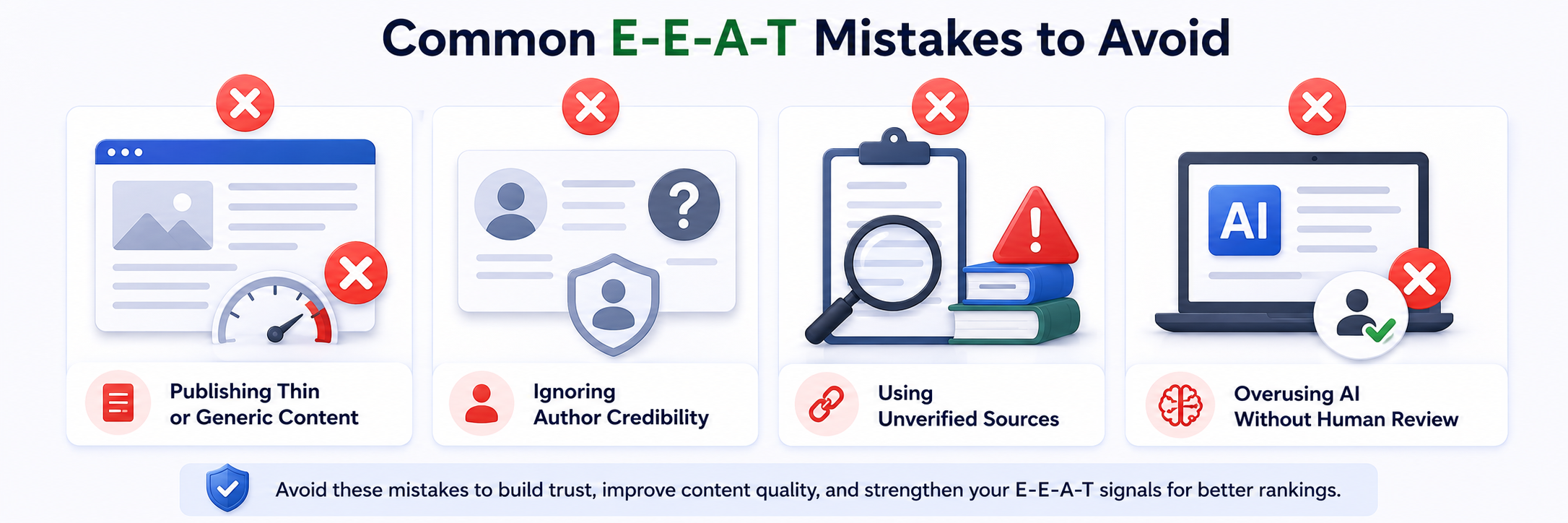
E-E-A-T mistakes often reduce content quality, weaken trust, and limit visibility in Google search results. Many websites focus on surface-level SEO while ignoring credibility, accuracy, and user value. Avoiding these common issues helps maintain strong E-E-A-T signals and long-term rankings.
Publishing Thin or Generic Content
Thin content lacks depth, originality, and real value. Pages that repeat common information without adding insights fail to meet user intent. This often leads to low engagement and high bounce rates. High-performing content should provide clear answers, unique perspectives, and complete coverage of the topic.
Ignoring Author Credibility
Content without clear authorship reduces trust. Missing author bios, qualifications, or experience signals weak expertise. Users want to know who created the content and why they should trust it. Transparent authorship with proven knowledge improves credibility and authority.
Using Unverified Sources
Relying on unreliable or outdated sources harms accuracy. Content without proper citations or fact-checking spreads misinformation and lowers trust. Strong E-E-A-T requires linking to credible references, using verified data, and ensuring all claims are supported.
Overusing AI Without Human Review
AI-generated content without proper review often lacks accuracy and originality. It can include factual errors, generic insights, or misleading information. Without human editing and validation, this content fails to demonstrate real expertise or experience, which weakens E-E-A-T and can reduce rankings.
Real Examples of Websites Demonstrating Strong E-E-A-T
Strong E-E-A-T is not theoretical. Many successful websites apply these principles through real expertise, transparency, and consistent value. The examples below show how different types of sites build trust, authority, and credibility in their niche.
Case Study 1: Content Authority Website
Dogster demonstrates high E-E-A-T through expert-driven content. Its articles are written and reviewed by veterinarians, certified trainers, and canine specialists. This ensures accuracy and real-world relevance, especially for topics like dog health and nutrition. The site uses clear author bylines, references, and disclaimers, which improve transparency. Its depth of content and expert involvement position it as a trusted resource for dog owners.
Case Study 2: Niche Expert Blog
GadgetMates builds E-E-A-T through real-world experience. As an active repair business with physical locations, its content comes from hands-on technical work. The site shares detailed repair guides and practical insights based on actual device fixes. Strong customer reviews, clear contact details, and service transparency reinforce trust. This combination of experience and reputation makes it a reliable source in its niche.
Case Study 3: Brand-Driven Website
Homesteading Family shows how personal branding strengthens E-E-A-T. The creators share first-hand experience from living a self-sufficient lifestyle, which adds authenticity to their content. Their articles, videos, and tutorials reflect years of practical knowledge. They openly share their identity, story, and background, which builds trust. Mentions in media, a strong community, and consistent content further establish their authority in the homesteading space.
Frequently Ask Questions
Conclusion: Why E-E-A-T Is Essential for Long-Term SEO Success
E-E-A-T is not a destination you reach once. It is an ongoing commitment to creating trustworthy content that answers audience questions and demonstrates real life experience. There are no shortcuts, quick fixes, or hacks that can boost E-E-A-T overnight. Trust is earned through consistency, expertise, and transparent communication.
Improving EEAT takes time. By regularly publishing expert content, showcasing firsthand experience, citing reputable sources, and refining your messaging, you build credibility and digital authority. These efforts compound over time, helping improve search rankings and supporting long term SEO success.
Muhammad Yousaf
Jam SEO Agency
Leads JamSEO Agency vision, growth, and client success through data driven SEO and digital strategy.