How to Recover from Google Algorithm Updates and Regain Rankings?
To recover from Google algorithm updates and regain rankings, first identify the impact on your website rankings, organic traffic, and search visibility, then analyze where sudden drops occurred. Focus on improving search quality by updating content, aligning with user intent, and fixing technical issues, as even well optimized websites can be affected. By following the right approach and using proven, real-world SEO recovery practices, digital marketers, SEO experts, and business owners can recover lost rankings and achieve stable growth over time.

What Are Google Algorithm Updates?
Google algorithm updates are changes made to a complex system that helps retrieve data from the search index and instantly deliver the best possible results for any query. The search engine uses a combination of algorithms and numerous ranking factors to decide how webpages are ranked based on relevance in search engine results pages (SERPs). These updates directly influence which content appears at the top and how visible a website becomes in search results.
In its early years, Google introduced only a handful of updates, but now it makes thousands of changes every year. Most updates are slight and go unnoticed, yet on some occasions, major algorithmic updates significantly impact SERPs and website performance. For website owners and SEO professionals, understanding these updates is essential because even small changes in ranking factors can affect traffic, visibility, and overall search presence.
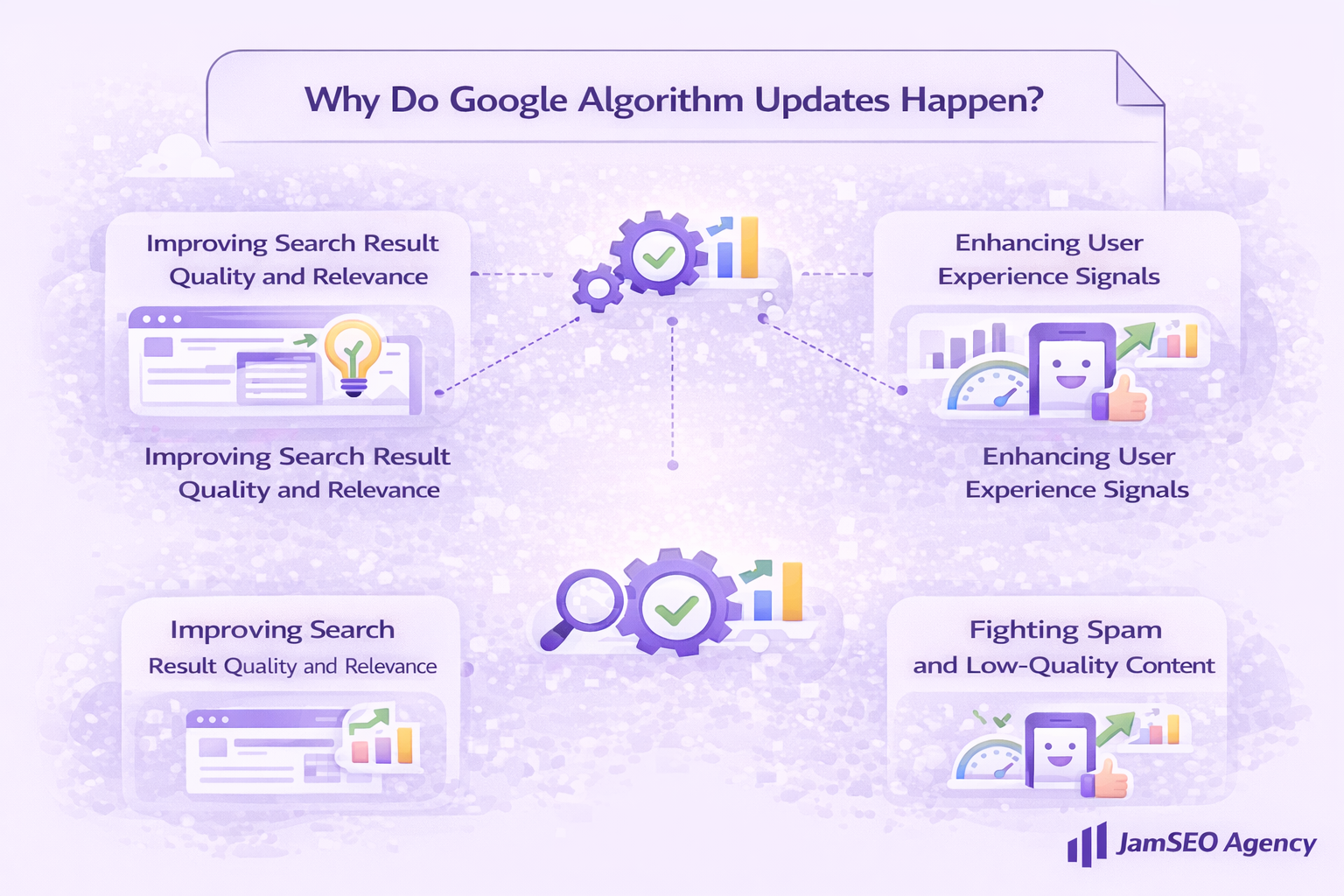
Why Do Google Algorithm Updates Happen?
Google algorithm updates happen to improve search quality and deliver the most relevant, trusted, and user-friendly results as user behavior and online content keep changing. These updates target spammy or manipulative tactics while rewarding websites that focus on content quality, search intent alignment, site usability, technical factors, and strong user experience signals across SEO and digital marketing.
Improving Search Result Quality and Relevance
To recover from an algorithm update, start by improving the overall quality and relevance of your content. Focus on matching user intent by updating outdated pages, adding accurate information, and making sure your content directly answers search queries. Review your top-performing and dropped pages to identify gaps, then improve keyword targeting, content depth, and internal linking so your pages better align with what users expect to find.
Fighting Spam and Low-Quality Content
Algorithm updates often target spammy tactics and low-quality content, so it is important to clean up anything that may harm your site. Remove or improve thin content, avoid keyword stuffing, and fix duplicate pages. If your site has low-quality backlinks or manipulative SEO practices, address them quickly. A clean, trustworthy website built on original and valuable content is more likely to regain rankings and maintain stability after updates.
Enhancing User Experience Signals
User experience plays a major role in recovery, as search engines measure how users interact with your site. Improve page speed, mobile responsiveness, and overall usability to reduce bounce rates and increase engagement. Make your content easy to read with clear structure and simple navigation. When users spend more time on your site and find value quickly, it sends strong signals that can help restore your search visibility and rankings.
Types of Google Algorithm Updates You Must Know
Core Updates
Google core updates are broad changes that improve search quality by re-evaluating ranking signals across all websites, often causing noticeable ranking volatility and SERP fluctuations.
- Broad core update affects overall site performance
- Re-evaluates ranking signals like relevance and authority
- Causes ranking volatility and visibility changes
- Focuses on search intent and content quality
- Rewards high-value, user-focused content
Spam Updates
Spam updates target manipulative tactics and low-quality practices that try to exploit search rankings, helping maintain a cleaner and more trustworthy search environment.
- Detects link spam and unnatural backlinks
- Targets manipulative tactics and spammy SEO
- Reduces visibility of low-quality content
- Uses advanced spam detection systems
- Encourages ethical SEO (opens in new tab) practices
Helpful Content Updates
The Helpful Content Update prioritizes people-first content that provides real value, ensuring that content is created for users rather than just search engines.
- Promotes people-first content strategies
- Focuses on content quality signals
- Aligns content with search intent
- Improves user experience signals
- Demotes unhelpful or thin content
Create Content Google Actually Rewards
Publish helpful, user focused content that builds trust, answers real queries, and improves long term rankings.
Product & Reviews Updates
Product & Reviews Updates improve how review content is ranked by rewarding authentic, experience-based insights and detailed evaluations.
- Focuses on review content quality
- Rewards authentic reviews and real expertise
- Evaluates affiliate content quality
- Promotes detailed comparisons and insights
- Highlights strong expertise signals
AI and Search Experience Updates
AI search updates are shaping modern search through technologies like Google AI Overviews, improving how users receive results with smarter and more personalized experiences.
- Uses machine learning and natural language processing
- Supports semantic search and entity-based ranking
- Enables conversational and predictive search
- Increases zero-click results
- Enhances search personalization
Why Rankings Drop After Google Algorithm Updates?
Thin or Low Quality Content
Ranking drops often happen when a website relies on thin content or low quality pages that fail to provide real value. Pages with low content depth, duplicate content, or poor relevance do not meet user intent, which reduces their visibility in search results. Outdated content and weak semantic relevance also signal that the page is no longer useful.
Weak E-E-A-T Signals
Search engines evaluate trust and authority through E-E-A-T signals. If a website lacks author credibility, clear expertise, or reliable sources, it becomes harder to maintain rankings. Weak trust signals, low content accuracy, and poor reputation can cause search engines to rank competing, more authoritative content higher.
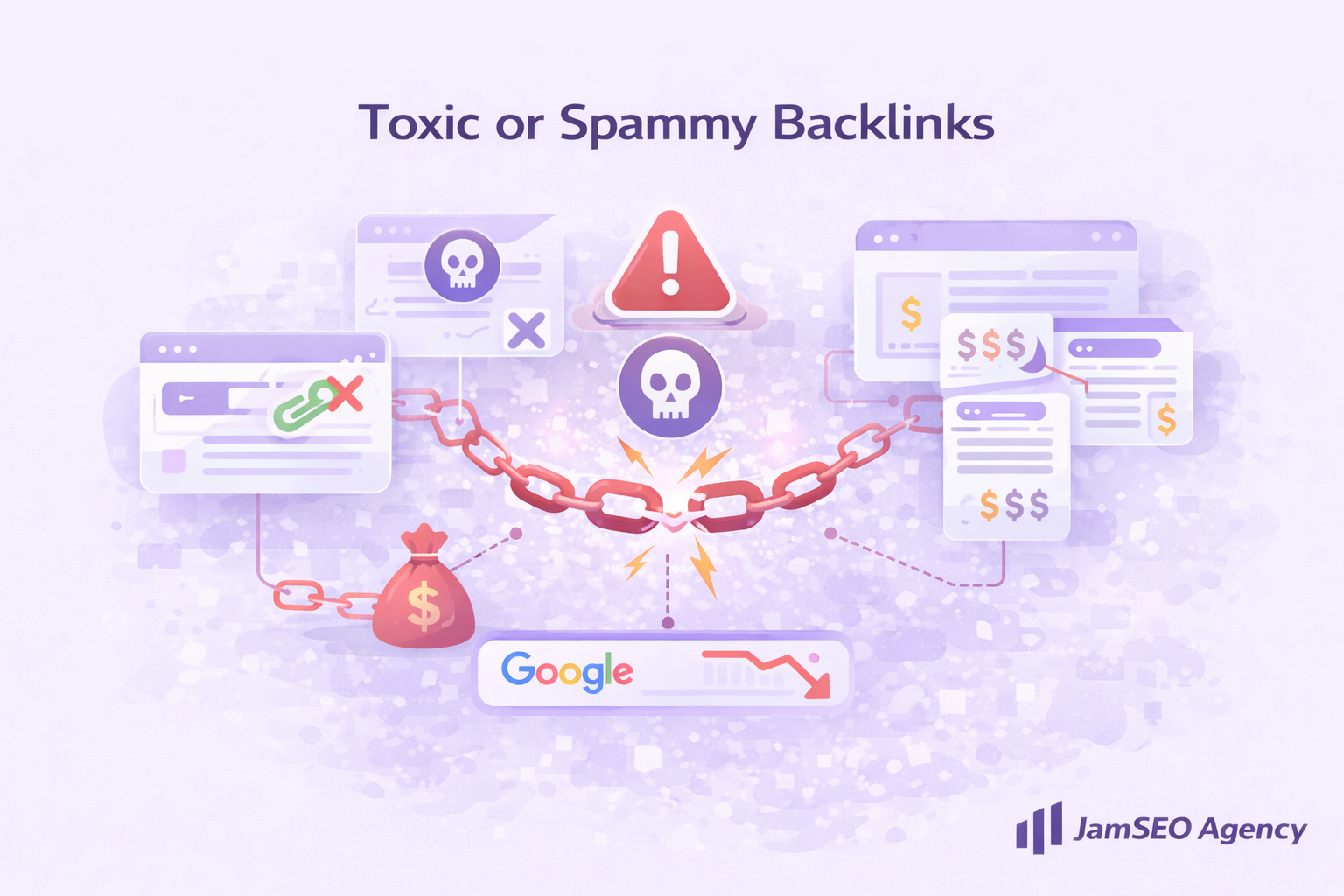
Toxic or Spammy Backlinks
A backlink profile filled with toxic backlinks or spammy links can negatively impact rankings. Unnatural links, link schemes, and anchor text manipulation send signals of low trust. In some cases, these links can trigger penalties or reduce the overall authority of the website.
Technical SEO Issues
Technical SEO issues can limit a website’s ability to perform well in search results. Crawl errors, indexing issues, slow page speed, and poor mobile friendliness affect how search engines access and evaluate pages. Problems like broken links, redirect issues, and incorrect canonical tags can further reduce visibility.
Competitor Improvements
Rankings can also drop when competitors improve their SEO strategy. Better content, stronger backlink profiles, and enhanced user experience allow other websites to gain higher positions. Increased competition in SERPs often pushes previously ranking pages lower, even if they have not changed.
How to Identify If Your Website Was Hit by an Update?
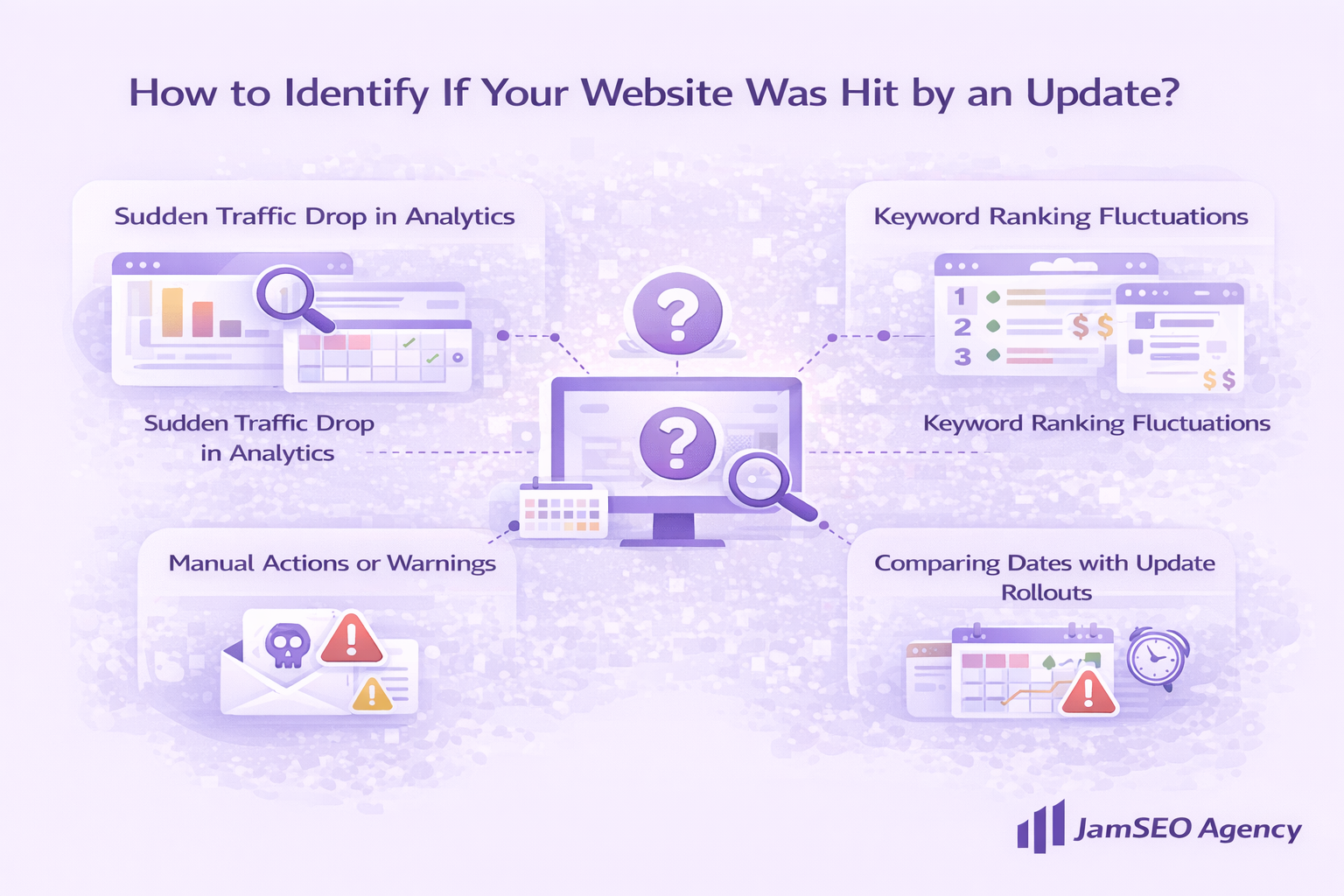
Sudden Traffic Drop in Analytics
One of the clearest signs of an algorithm update is a sudden drop in organic traffic. Use Google Analytics (opens in new tab) or GA4 (opens in new tab) to monitor traffic decline, impressions, and clicks. If your website suddenly patterns across key pages like blog posts, product pages, or informational content, it may indicate an algorithmic impact.
Focus on data analysis to identify impact and confirm cause. Compare data before updates and after updates to see where traffic loss occurred. This helps you understand which page types were affected and supports ranking drop recovery decisions.
Keyword Ranking Fluctuations
Keyword ranking fluctuations are another strong signal. Use keyword tracking tools like Semrush (opens in new tab) or Ahrefs (opens in new tab) to track keyword losses, visibility changes, and rankings across multiple keywords. Sudden loss of rankings or increased ranking volatility often appears during an update rollout.
These impactful fluctuations can also include loss of featured snippets or answer box positions. Monitoring these changes helps pinpoint which keywords and pages lost visibility and how search performance shifted.
Manual Actions or Warnings
Check Google Search Console (opens in new tab) for any manual action warning. If there is no manual action, the issue is likely an algorithmic impact rather than a penalty. However, if warnings appear, they can directly explain traffic decline or ranking drops.
Understanding the difference is important because manual actions require specific fixes, while algorithm updates affect rankings based on quality signals. Regular monitoring ensures you catch these signals early.
Comparing Dates with Update Rollouts
To confirm if your website was hit, compare update dates with your traffic and ranking changes. Match sudden drops, decreased keyword rankings, and changes in conversion rates with known update confirmations from official Google channels or industry forums.
This comparison helps validate whether the issue aligns with Google algorithm updates. When patterns match update rollout timelines, it becomes easier to confirm the cause and plan the next steps for recovery.
How to recover from Google Algorithm update Step-by-Step Process
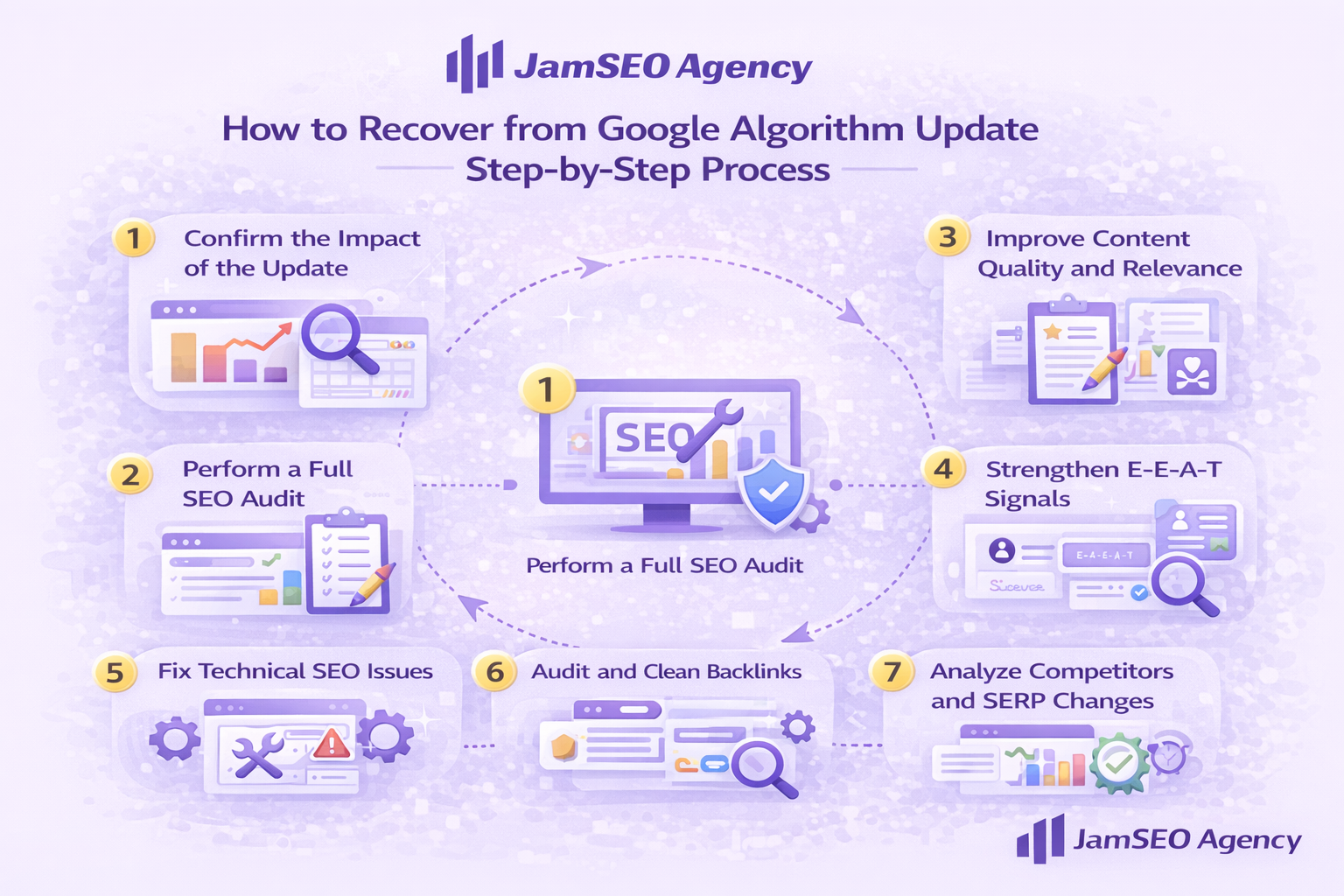
Step 1: Confirm the Impact of the Update
Start the recovery process by using analytics to determine drop patterns in traffic and rankings. Correlate these changes with Google update dates and assess which sections, landing pages, and content types suffered the most. This step helps confirm the update impact instead of guessing the cause.
Focus on impressions, clicks, and traffic fluctuations to identify where losses happened. A clear comparison of before and after data builds the foundation for accurate SEO recovery.
Step 2: Perform a Full SEO Audit
Next, run a deep-dive site audit that includes both technical audit and content audit. Check crawl errors, broken links, load times, Core Web Vitals, and schema configuration to evaluate technical health. At the same time, review thin content, outdated content, copied content, and low-value content that may trigger penalties.
This audit gives a complete view of your site and highlights issues that may drag performance down after algorithm updates.
Step 3: Improve Content Quality and Relevance
Improving content quality is central to recovery. Reassess content quality across all pages and update pages to better match search intent and user query expectations. Expand content depth, remove low-quality pages, and merge overlapping content where needed.
Focus on creating unique value, real insight, and strong alignment with searcher needs. Content that serves real people instead of just search engines performs better over time.
Step 4: Strengthen E-E-A-T Signals
Google evaluates content based on E-E-A-T signals, so strengthening Experience, Expertise, Authoritativeness, and Trustworthiness is essential. Add clear author bios, credentials, and improve About pages and Contact pages to build trust.
Support your content with reputable sources, case studies, and first-hand insights. Websites that show real expertise and authority tend to recover faster after updates.
Step 5: Fix Technical SEO Issues
Even great content cannot perform well if technical issues exist. Fix technical SEO issues such as crawl errors, fixing indexing errors, and improving Core Web Vitals. Ensure mobile usability, clean internal linking, and a clear site structure.
Fix Technical Issues That Block Your Rankings
Resolve crawl errors, improve site structure, and ensure your website performs smoothly for search engines.
Strong technical health allows search engines to crawl, index, and re-evaluate your site properly during core updates.
Step 6: Audit and Clean Backlinks
Backlinks still play a major role in rankings. Review backlinks carefully by running an audit backlinks process to check relevance and quality. Identify toxic links, spam patterns, and unnatural signals.
Remove links only when necessary or use disavow links carefully. Focus on earning links naturally through strong content because quality beats quantity in the long term.
Step 7: Analyze Competitors and SERP Changes
Analyze the competitive landscape through SERP analysis to understand what has changed. Study lost keywords, page clusters, and observe content and features that Google is now prioritizing such as local, informational, or e-commerce results.
If search intent has shifted, adjust your strategy to align with new expectations. Competitor improvements often explain ranking drops more than site issues.
Step 8: Monitor, Test, and Iterate
Recovery unfolds over time, so continuous monitoring and iteration are essential. Monitor rankings, traffic fluctuations, and user behavior as Google reassesses your site.
Test optimizations, iterate strategies, and stay patient. Full recoveries often appear after subsequent updates as Google recrawls and re-evaluates your site.
Google Algorithm Update Recovery Strategies
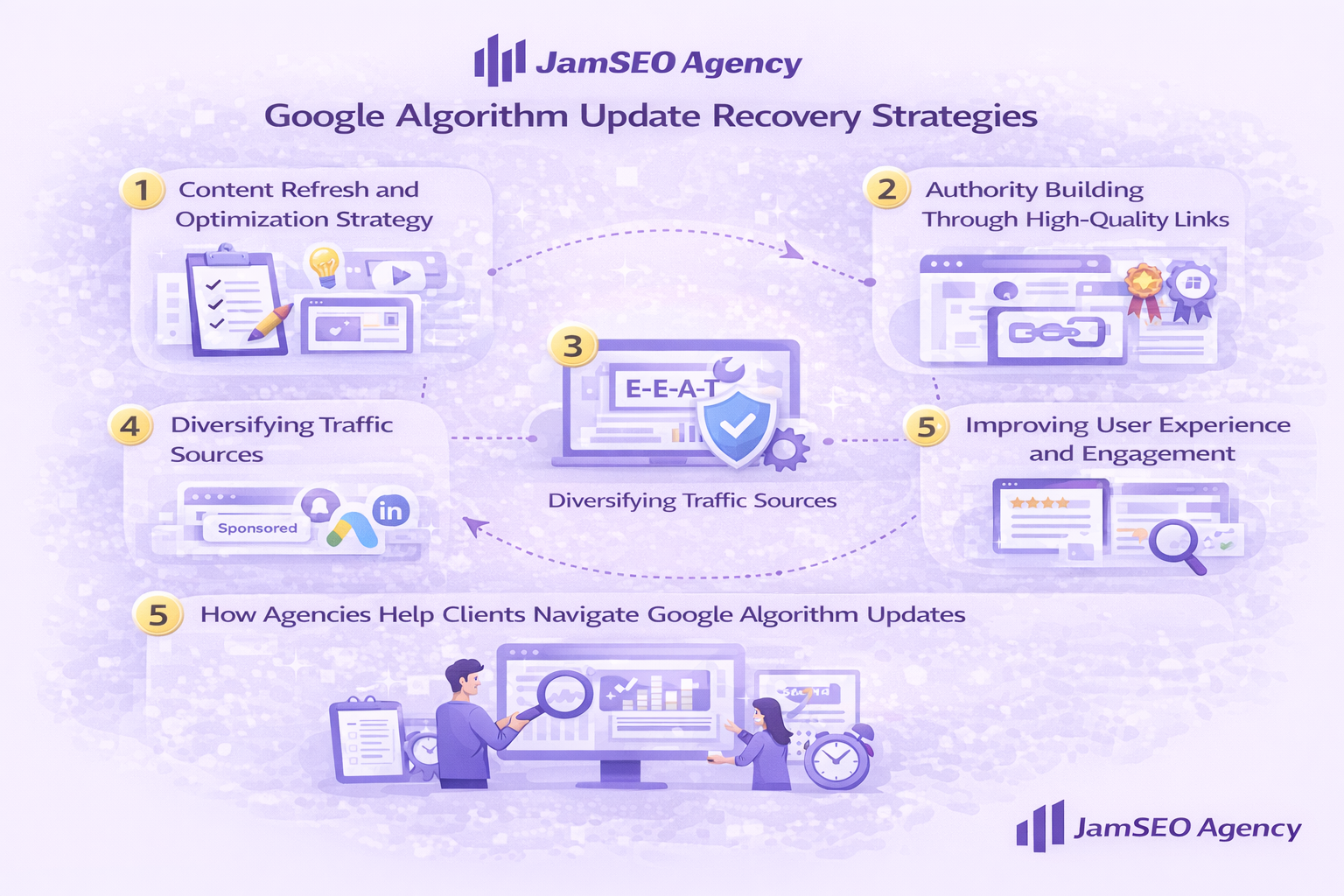
Content Refresh and Optimization Strategy
A strong recovery strategy starts with improving content quality and relevance. Align each page with the target query intent, whether informational, commercial, transactional, or navigational. Update pages with unique research, up-to-date facts, expert insights, and multimedia like videos, infographics, and FAQs to increase user value.
At the same time, remove low-quality content, thin content, and duplicate sections, or use noindex where needed. This content refresh helps search engines reassess your site positively and improves overall SEO performance.
Authority Building Through High-Quality Links
Building authority requires earning high-quality backlinks from trusted sources. Publish expert-authored content, display credentials, bios, and include third-party citations to strengthen E-E-A-T signals. Highlight awards, certifications, and relevant experience, especially in trust-driven sectors like health and finance.
Focus on quality over quantity by gaining links naturally through valuable content and external links. Strong authority signals help improve rankings and restore trust after algorithm changes.
Diversifying Traffic Sources
Relying only on organic SEO can be risky during updates. Diversify digital marketing channels by combining Paid Marketing like Google Ads and LinkedIn Ads with Digital Marketing strategies such as email marketing, social media, and influencer campaigns.
This approach helps sustain traffic and lead flow during downturns and ensures consistent growth even when organic rankings fluctuate.
Improving User Experience and Engagement
User experience directly affects rankings and engagement. Improve site usability by fixing speed problems, optimizing mobile performance, and avoiding aggressive ads, pop-ups, and banners, especially above-the-fold. Transparent advertising, clear ad policies, and proper monetization practices build trust and improve interaction.
Turn Visitors Into Customers with Better UX
Improve layout, navigation, and user flow to boost engagement, reduce bounce, and increase conversions.
Enhancing page experience with better design, readability, and navigation keeps users engaged longer, which signals quality to search engines.
How Agencies help clients navigate google algorithm updates
Agencies follow structured recovery strategies using a data-driven approach. They confirm algorithm update impact through analytics and industry news, then segment traffic and analyze rankings to identify affected areas. A comprehensive audit, including technical audit and content audit, helps uncover issues.
They also overhaul landing pages with enhanced content, improve clarity, and update expert citations. By continuously monitoring SERP movement through tools like Google Search Console data, agencies iterate strategies and guide businesses through stable recovery and long-term growth.
Common Challenges During SEO Recovery
Delayed Recovery Timeline
One of the biggest challenges in the recovery process is the delayed recovery timeline. Even after fixing content, backlinks, UX, and technical issues, results do not appear immediately. Google updates take time to reassess websites, and recovery often depends on future updates rather than instant changes.
This delay becomes harder when content overhaul demands require upgrading content at scale, especially old posts and thin posts. It takes time, editorial resources, and expert collaboration to fully improve site quality, so patience and consistent effort are essential.
Misidentifying the Cause of Ranking Drop
Pinpointing the root cause of a ranking drop is difficult because updates rarely provide detailed feedback. Website owners must rely on rigorous analysis and experimentation to understand whether content, backlinks, UX, or technical factors triggered the drop.
Without proper analysis, many misjudge the issue and apply the wrong fixes. For example, focusing only on backlinks while ignoring changing search intent or content types can delay recovery and lead to further losses.
Over Optimization Mistakes
During recovery, some sites over-optimize in an attempt to fix rankings quickly. This includes excessive content changes, aggressive SEO tactics, or forcing keyword adjustments that do not match the query or user intent.
Over optimization can create new problems such as poor UX, unnatural content, or technical SEO barriers like crawlability and indexing issues. Instead of helping, these mistakes can block content from resurfacing and make recovery slower and more unstable.
How Long Does It Take to Recover from Google Updates?
Factors That Affect Recovery Time
Google algorithm update recovery timing depends on several factors, and there are no instant wins. Recovery time varies based on how well you improve content, strengthen EEAT, and fix technical SEO issues. If a site quickly aligns with Google’s intent and follows best practices, it may see short-term recovery within weeks or a few months.
However, long-term recovery often takes longer, especially when dealing with repeated deep drops or issues in sensitive sectors like YMYL or finance. Google needs time to reassess site quality, and consistency matters more than speed when trying to regain lost rankings.
Core Update vs Minor Update Recovery Time
The type of update plays a major role in recovery time. Minor updates usually cause small ranking fluctuations and recovery can happen within 2–4 weeks if issues are addressed quickly. Core updates have a deeper impact and recovery may take 1–3 months or even 3–6 months in complex cases.
Scenario | Typical Recovery Timeline |
Minor ranking fluctuation | 2–4 weeks |
Moderate impact (minor updates) | 1–3 months |
Major core update impact | 3–6 months |
Repeated deep drops (YMYL) | Up to a year (site dependent) |
How to Protect Your Website from Future Algorithm Updates
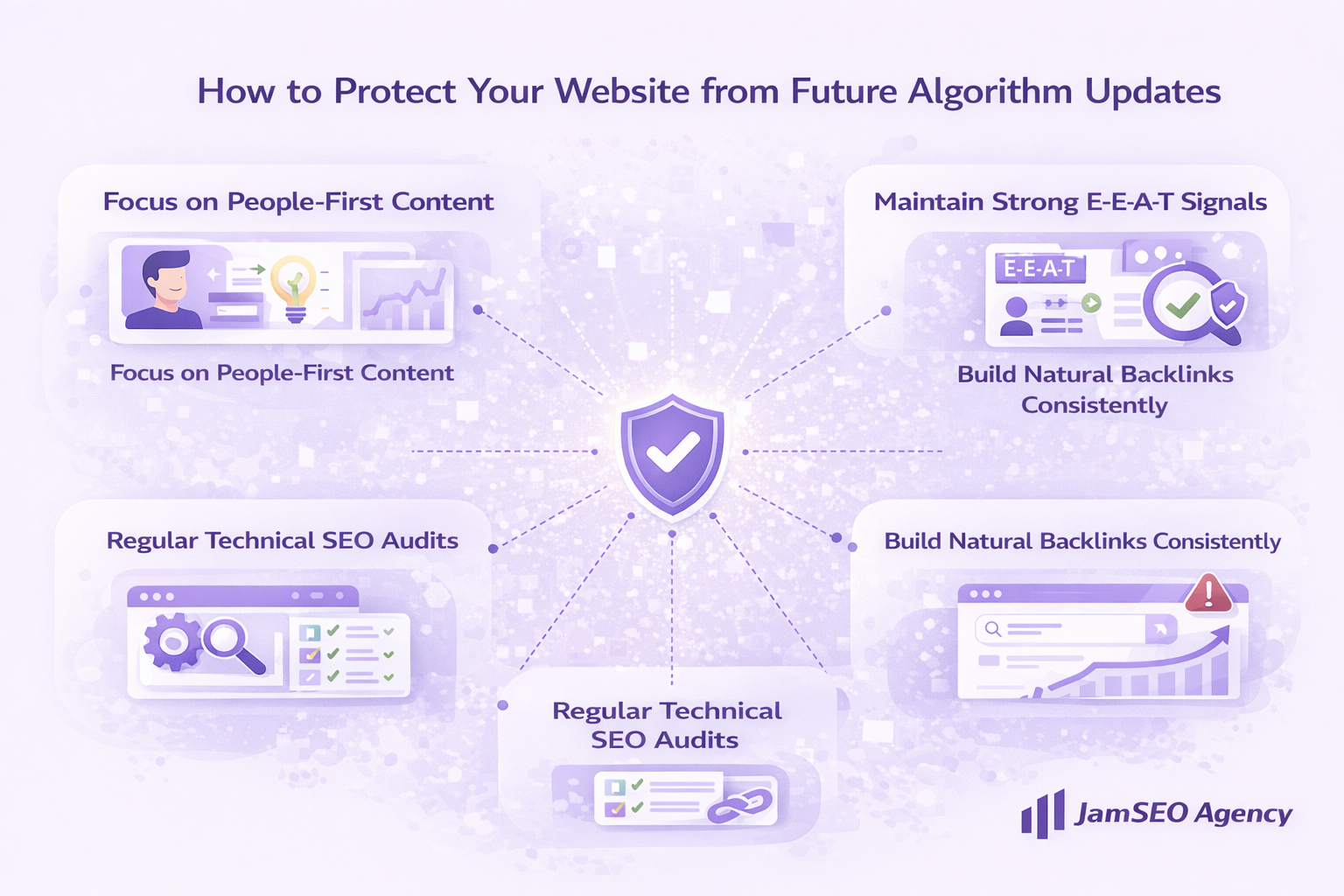
Focus on People-First Content
The most reliable way to protect your website is by publishing people-first content that delivers real value. Focus on experience-driven content that answers user needs clearly and honestly, rather than writing only for search engines. When your content solves real problems, your website becomes more resilient to future Google algorithm updates.
Follow best practices by aligning with Google Helpful Content guidelines and regularly updating content to keep it useful and relevant. Websites built around genuine value tend to survive updates and often benefit from them.
Maintain Strong E-E-A-T Signals
Strong E-E-A-T signals help build trust and authority over time. Show clear expertise, real experience, and credibility across your content so users and search engines can rely on your site. This makes your website more stable during algorithm changes.
Consistently improving trust signals ensures your site is not easily affected by ranking shifts. A trustworthy website stands out even when algorithms change frequently.
Regular Technical SEO Audits
Technical health plays a key role in long-term stability. Regular technical audits help identify issues early, such as crawl errors, slow performance, or indexing problems that could affect visibility.
By maintaining a strong technical foundation and running regular content audits, you ensure your site stays optimized and ready for algorithm changes without sudden drops.
Build Natural Backlinks Consistently
Backlinks remain an important signal, but the focus should be on quality and consistency. Build natural backlinks by creating valuable content that others want to reference and share.
Build Authority That Search Engines Trust
Earn quality backlinks and strengthen your site’s credibility to improve rankings and long term visibility.
Avoid shortcuts and spammy practices. A steady flow of relevant, high-quality links strengthens your site authority and helps it stay resilient during updates.
Stay Updated with SEO Trends
Search behavior and algorithms change constantly, so monitoring algorithm changes proactively is essential. Stay informed about SEO trends, updates, and industry shifts to adjust your strategy in time.
Websites that adapt quickly to new patterns and user expectations are better positioned to protect their rankings and maintain long-term growth.
Google Algorithm Update Timeline
Recent Updates (2026–2024)
Google has released several Google core updates in recent years, including the March 2024 Core Update (opens in new tab) and November 2023 Core Update (opens in new tab). These updates often include changes like the Helpful Content Update, Spam Update, and Product Reviews Update, which focus on improving search quality and content evaluation.
During each algorithm rollout, websites may experience ranking volatility, SERP fluctuations, and changes in search visibility. These updates aim to refine ranking signals, improve user experience, and reward high-quality content across the web.
Important Historical Updates
Google’s historical timeline includes major algorithm milestones like Google Panda (opens in new tab), Google Penguin (opens in new tab), Google Hummingbird (opens in new tab), Google RankBrain (opens in new tab), Google BERT (opens in new tab), and Google Medic Update (opens in new tab). Each update introduced key changes in how search engines evaluate content, links, and relevance.
These updates shaped semantic search evolution, improved content quality signals, and reduced spam through link spam updates and ranking algorithm changes. They form the foundation of how modern search engines work today.
Evolution Toward AI Search
Google is moving toward AI search with features like Google AI Overviews (opens in new tab) and models like Google Gemini. These advancements use machine learning and natural language processing to better understand user intent and deliver more contextual results.
This shift enables generative search, conversational search, and predictive search experiences. AI-driven algorithms now focus on entity-based ranking, search personalization, and zero-click searches, changing how users interact with search results.
How often does Google update its Algorithm
Google algorithm updates happen very frequently, with thousands of updates per year and daily ranking changes. Most are minor updates, while core updates bring larger changes that affect rankings and visibility.
These continuous improvements include algorithm refresh cycles, real-time updates, and adjustments to the search index. Crawling and indexing changes, along with ongoing algorithm testing, lead to constant SERP volatility, making SEO an ongoing process rather than a one time effort.
Tools to Analyze and Recover from Algorithm Updates
SEO Audit Tools
SEO audit tools help you identify technical and structural issues that affect rankings after a Google update. They provide a clear view of site health and highlight areas that need fixing for better recovery.
- Technical audit and site audit for overall site health
- Crawl analysis to detect crawl errors and indexing issues
- Core Web Vitals and page speed insights for performance
- XML sitemap and robots.txt checks for proper crawling
- Schema validation and structured data testing for better understanding
- Site health monitoring using Google Search Console
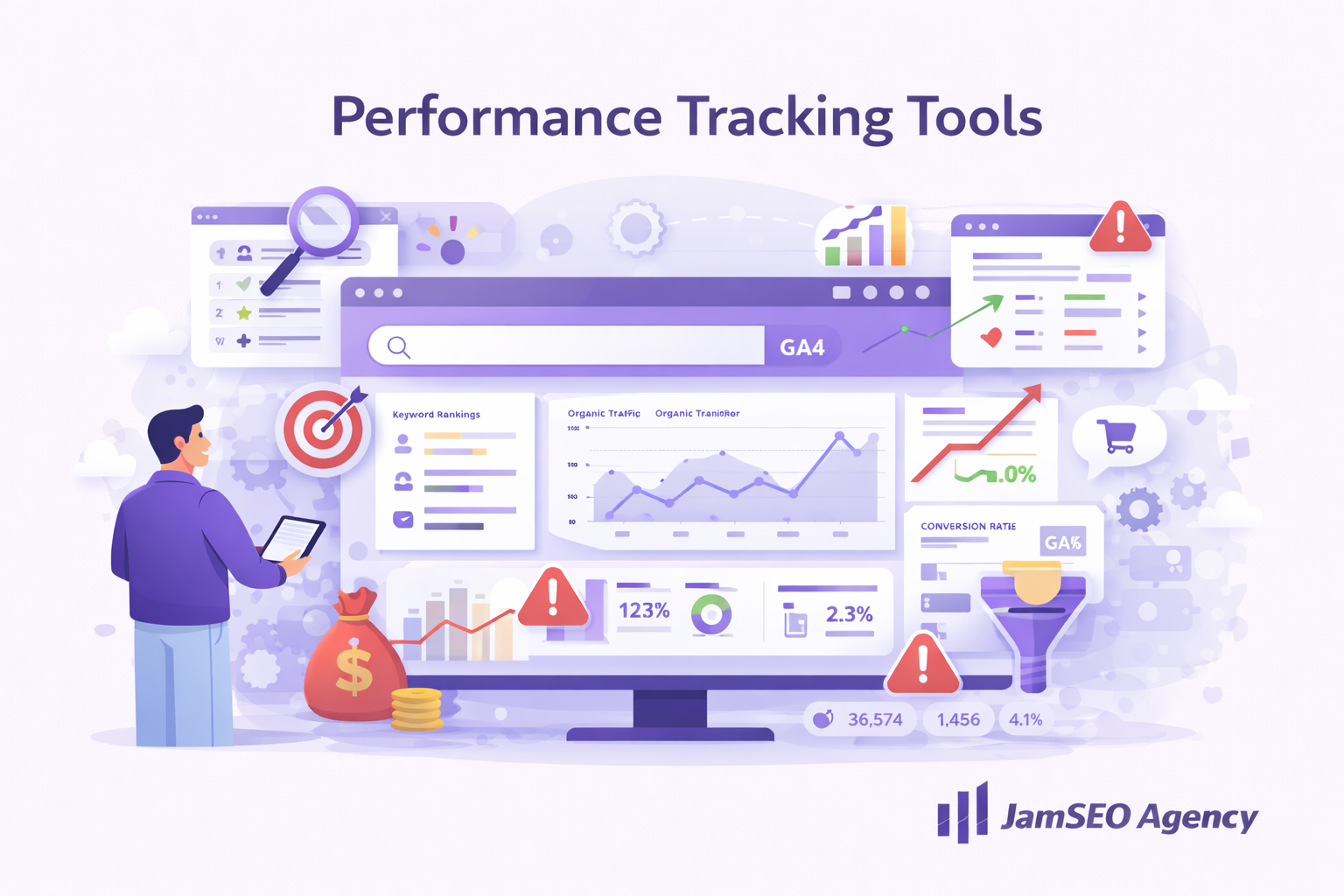
Performance Tracking Tools
Performance tracking tools show how your website is performing during and after an update. They help measure visibility, traffic changes, and user interaction to guide recovery decisions.
- Keyword tracking and ranking tracker for position changes
- SERP tracking to monitor search visibility
- Organic traffic analysis using GA4
- Impressions, clicks, and CTR tracking
- Conversion tracking to measure results
- User behavior analysis for engagement insights
Backlink Analysis Tools (Ahrefs, Moz)
Backlink analysis tools help evaluate link quality and authority, which play a major role in rankings. They also help detect harmful links that may impact recovery.
- Backlink profile and referring domains analysis
- Link quality and anchor text distribution review
- Toxic backlinks detection and link audit
- Domain authority and page authority tracking
- Competitor analysis, keyword gaps, and content gaps
- Tools like Ahrefs and Moz for data insights and recovery tracking
Common SEO Mistakes That Trigger Algorithm Penalties
Keyword Stuffing and Thin Content
One of the most common SEO mistakes is keyword stuffing, where pages are filled with unnatural keywords just to rank. This often leads to poor content quality and a bad user experience. When keyword density is too high or content feels forced, it creates a search intent mismatch and reduces trust.
Thin content and low-value pages also trigger algorithm penalties. Pages with little useful information, over-optimization, or content spam fail to meet user needs. Google prefers content that is clear, helpful, and written naturally for real users.
Buying Low Quality Backlinks
Buying backlinks or using link schemes is a risky practice that can lead to link penalties or manual actions. Low-quality backlinks, toxic backlinks, and backlink spam send negative signals about your website’s authority and trustworthiness.
Unnatural link building, including paid links and anchor text manipulation, often harms rankings instead of improving them. A strong backlink profile should grow naturally with high-quality, relevant links rather than shortcuts.
Ignoring Technical SEO Issues
Ignoring technical SEO issues can quietly damage your rankings over time. Problems like crawl errors, indexing issues, broken links, and slow page speed prevent search engines from properly accessing your site.
Other issues such as poor Core Web Vitals, mobile usability issues, site structure problems, and canonical issues also affect performance. These technical gaps lead to poor user experience and low engagement signals, which can trigger ranking drops.
Duplicate or Spam Content
Duplicate content, plagiarized content, and scraped content create confusion for search engines and reduce content value. When multiple pages offer the same information, it becomes harder for Google to decide which one to rank.
Spam content such as doorway pages or auto-generated content further increases the risk of penalties. These practices do not provide real value and often result in lower rankings or complete loss of visibility.
Conclusion: Recovering from Google Updates Requires Strategy and Patience
Recovering from Google algorithm updates requires a clear SEO recovery strategy and patience. Focus on content quality, user-focused content, and search intent alignment to improve rankings and search visibility. Strong E-E-A-T signals and trust signals help build long-term authority.
Technical SEO also matters. Improve Core Web Vitals, crawlability, and indexing optimization while maintaining a clean backlink profile with good link quality. Use Google Search Console and GA4 for performance tracking and better decisions.
Consistent effort leads to better results. Adapt to changes, follow SEO best practices, and use competitor analysis to support sustainable growth and long-term SERP stability.
FAQs About Google Algorithm Updates and Recovery
Muhammad Yousaf
Jam SEO Agency
Leads JamSEO Agency vision, growth, and client success through data driven SEO and digital strategy.