SEO Step-by-Step Guide: How to Do SEO for Beginners (Complete Process)
Learn how to do SEO for website step by step with this beginner friendly guide. Discover keyword research, on page SEO, technical optimization, link building, and proven strategies to improve rankings, increase organic traffic, and grow your website.

.png)
What Is SEO and How Does It Work?
Search Engine Optimization (SEO) (opens in new tab) is the process of optimizing a website so it appears in search results when people are searching for topics, products, or answers. It focuses on improving visibility across platforms like Google and Bing, as well as AI assistants such as ChatGPT, Gemini, and Perplexity. Instead of relying on ads, SEO helps your content earn organic traffic by matching what users are actively asking and searching.
SEO works by aligning your content with how search engines and AI systems evaluate web pages. They crawl and index your site, then rank it based on relevance, quality, and trust. This includes using the right keywords, creating useful content, improving site speed, and earning links from other websites. When done correctly, your pages can appear higher in search engine results pages, featured snippets, or AI-generated summaries that users rely on for quick answers.
In practice, SEO is about delivering real value better than others targeting the same topics. As noted by Rand Fishkin (opens in new tab), co-founder of Moz, strong SEO builds on a solid foundation of technical health, content quality, and user experience. Even a small amount of SEO knowledge, applied consistently, can increase visibility, attract qualified traffic, and create long term, compounding results for your business.
Why SEO Is Important for Websites?
SEO is important because it determines whether your website appears when people search on platforms like Google and Bing, as well as AI assistants such as ChatGPT. It helps search engines understand your content, match it with user intent, and position your site where your brand can be seen. Without SEO, your website is unlikely to attract traffic while competitors targeting the same keywords gain visibility.
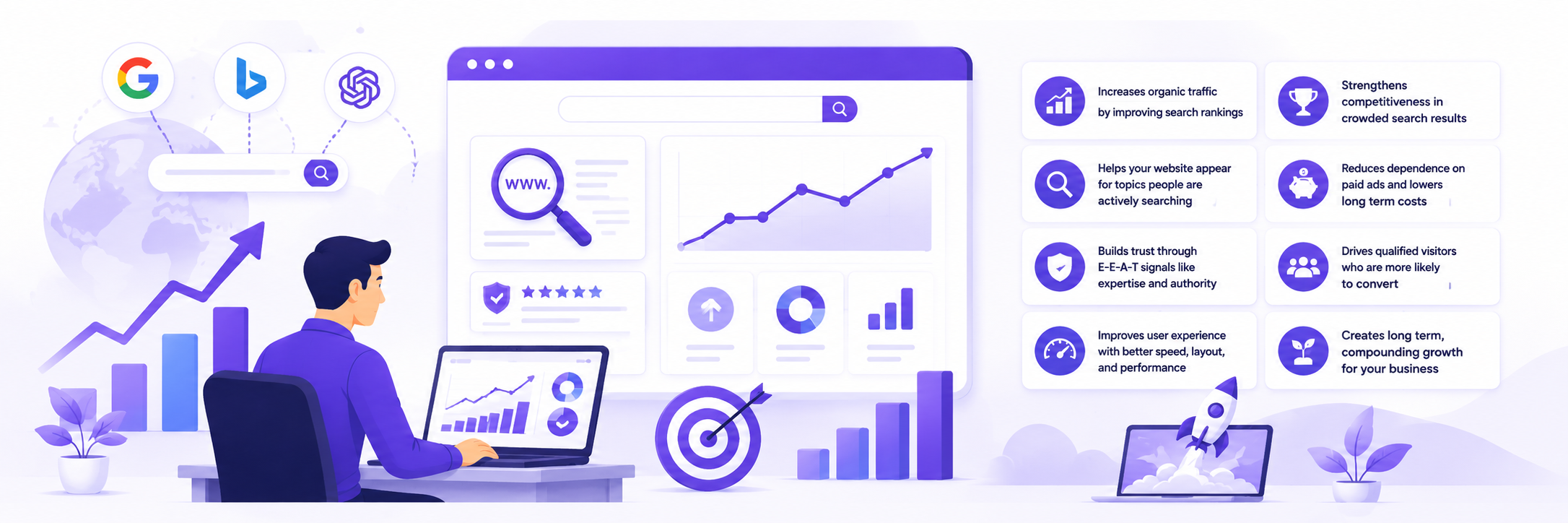
- Increases organic traffic by improving search rankings
- Helps your website appear for topics people are actively searching
- Builds trust through E E A T signals like expertise and authority
- Improves user experience with better speed, layout, and performance
- Strengthens competitiveness in crowded search results
- Reduces dependence on paid ads and lowers long term costs
- Drives qualified visitors who are more likely to convert
- Creates long term, compounding growth for your business
Search Engine Process for Website SEO
How Crawling Impacts Your Website SEO
Crawling is the first step where search engines like Google use bots such as Googlebot to discover web pages. These crawlers follow links across your website and other sites to find new or updated content. If your pages are easy to access, properly linked, and free from technical issues, they are more likely to be crawled efficiently.
Strong crawling ensures your content gets noticed in the first place. For example, if a new blog post is linked from your homepage, crawlers can quickly find and record it. Poor structure, broken links, or server issues can block this process, which means your content may never reach the next stage.
How Indexing Determines Your Website Visibility
Once a page is crawled, search engines analyze it and decide whether it should be stored in their index. This index works like a massive database of web content that can be retrieved when users search for answers. Only pages that offer unique, relevant, and valuable information get indexed.
If your content is duplicate, thin, or lacks relevance, it may not be included. You can check indexed pages by searching site:yourdomain.com or using tools like Google Search Console. Proper indexing directly impacts visibility because if a page is not indexed, it cannot appear in search results.
How Ranking Affects Your Website Position in SERPs
Ranking is the final step where search engines decide the position of your page in search engine results pages. Algorithms evaluate many signals such as keyword relevance, content quality, backlinks, page speed, and mobile friendliness. Pages that best match user intent and provide value rank higher.
This step determines how much traffic your site receives. Even if your page is indexed, it will not perform well without strong ranking signals. Effective SEO focuses on improving technical setup, optimizing on page content, and building authority through links so your pages can compete and appear higher in search results.
Step-by-Step SEO Process
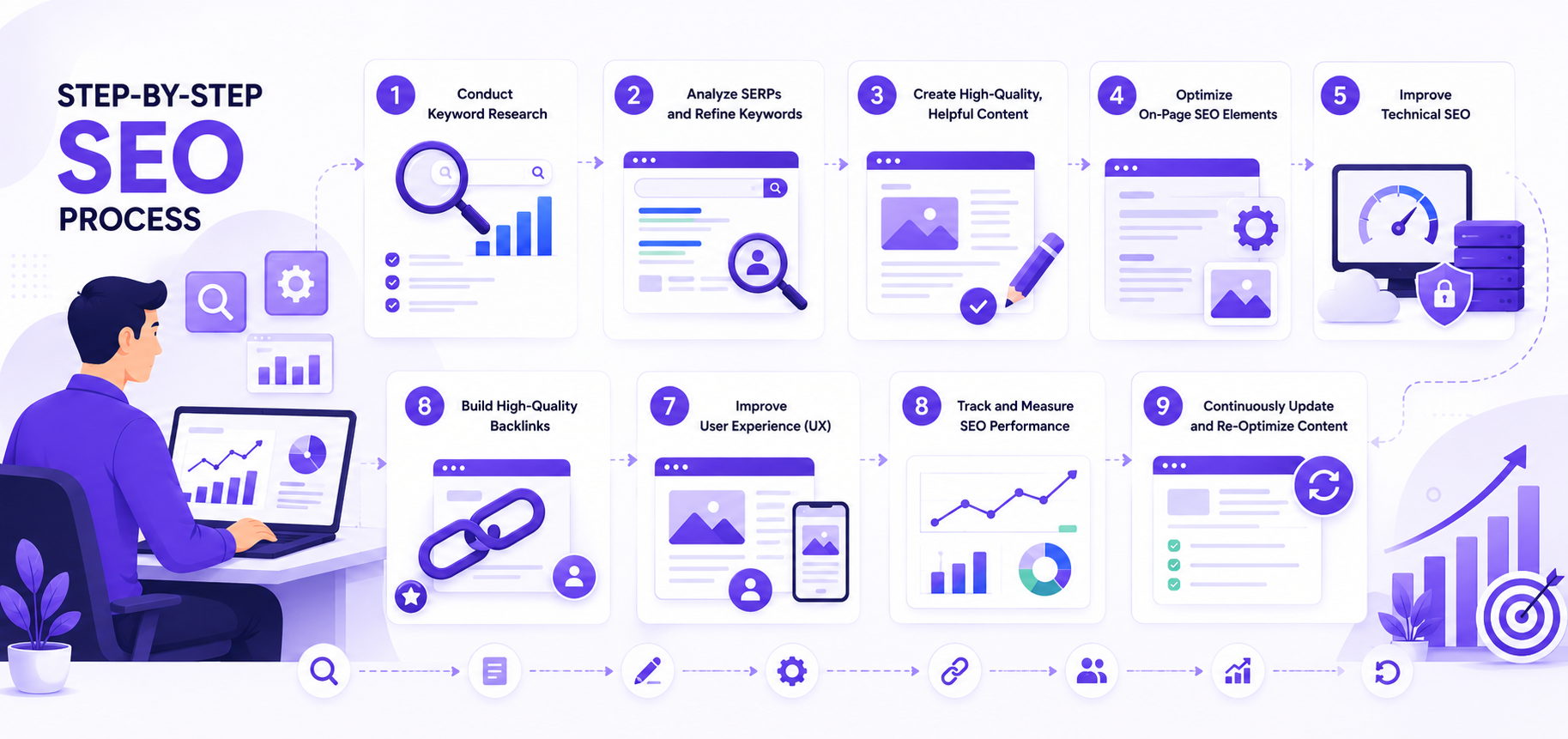
Step 1: Conduct Keyword Research
Find Relevant Keywords
Start by identifying keywords your target audience actually uses in search engines and AI assistants. Focus on terms, phrases, and questions that reflect real search behavior. Use tools like Ahrefs Keyword Explorer (opens in new tab) and Google Trends (opens in new tab) to uncover search volume, keyword ideas, and popularity trends.
Combine short-tail and long-tail keywords to balance reach and competition. Short phrases bring higher traffic, while long-tail keywords often drive qualified traffic with clearer intent. Build a keyword list that aligns with your services, products, or content topics.
Analyze Search Intent
Search intent determines why users search a keyword. Identify whether the intent is informational, navigational, or transactional. Review what users expect to see when they type a query and match your content accordingly.
Look at top-ranking pages to understand patterns. If results show guides, create in-depth educational content. If they show product pages, focus on conversions. Aligning content with intent improves relevance and ranking potential.
Evaluate Keyword Competition
Assess how difficult it is to rank for a keyword by analyzing competitors and existing content. High competition keywords require stronger authority, backlinks, and better content quality.
Use SEO tools to evaluate keyword difficulty, domain authority, and backlink profiles. Target low-competition keywords early to gain traction, then scale toward competitive terms as your site grows.
Step 2: Analyze SERPs and Refine Keywords
Google Your Keywords
Search your target keywords directly on Google to study real search results. Observe featured snippets, “People also ask,” and content formats ranking on the first page.
This helps you understand what type of content performs best. You can then refine your keyword strategy based on actual SERP behavior rather than assumptions.
Study Competitors
Analyze top-ranking competitors to identify content structure, keyword usage, and engagement elements. Look at headings, content depth, visuals, and internal linking strategies.
Find gaps in their content and create something more valuable. Better structure, clearer explanations, and improved user experience can help you outrank competitors.
Step 3: Create High-Quality, Helpful Content
Align Content with Search Intent
Create content that directly answers user queries. Focus on solving problems, providing value, and covering topics in depth. This improves relevance and increases time spent on page.
Use semantic keywords naturally to strengthen topical authority. Avoid keyword stuffing and prioritize clarity, usefulness, and completeness.
Use Proper SEO Formatting
Structure content with clear headings, short paragraphs, and scannable sections. Use H1, H2, and H3 tags to organize information logically.
Include internal links, bullet points, and visuals to improve readability. Proper formatting helps both users and search engines understand your content better.
Add Experience and Expertise
Demonstrate real knowledge and practical experience in your content. Share insights, examples, or case-based explanations to build trust.
This aligns with Google EEAT (opens in new tab)principles, where experience, expertise, authority, and trust influence rankings. High-quality content backed by credibility performs better long term.
Step 4: Optimize On-Page SEO Elements
Title Tags and Meta Descriptions
Write compelling title tags that include your primary keyword and encourage clicks. Keep them clear, relevant, and within optimal length.
Meta descriptions should summarize the page and improve click-through rate. Even if search engines rewrite them, a strong description improves visibility.
Headings and Content Structure
Use headings to organize content into logical sections. This improves readability and helps search engines understand context.
Include keywords naturally in headings while keeping them user-friendly. Clear structure improves both UX and SEO performance.
URL Structure Optimization
Keep URLs short, descriptive, and keyword-focused. Avoid unnecessary parameters or complex structures. A clean URL helps both users and search engines understand page relevance quickly.
Image Optimization (Alt Tags)
Optimize images by compressing file sizes and adding descriptive alt text. Alt tags help search engines understand image context. They also improve accessibility for users relying on screen readers, which enhances overall user experience.
Step 5: Improve Technical SEO
Site Speed Optimization
Page speed directly impacts rankings and user experience. Use tools like Google PageSpeed Insights to identify issues.
Improve loading time by optimizing images, reducing scripts, and enabling caching. Faster sites reduce bounce rates and increase engagement.
Mobile-Friendliness
Ensure your website uses responsive design and works smoothly on mobile devices. Mobile-first indexing means search engines prioritize mobile versions. Test your site using tools like Google Search Console to identify usability issues.
HTTPS and Security
Secure your site with HTTPS to protect user data and build trust. Search engines consider security a ranking factor. An unsecured website may lose credibility and rankings over time.
robots.txt and Indexing Control
Use robots.txt to control which pages search engines can crawl. Proper configuration prevents indexing of low-value or sensitive pages. Incorrect settings can block important pages, so always test using tools in Google Search Console.
Sitemap Submission
Submit an XML sitemap to help search engines discover and index your pages efficiently. This improves crawlability and indexing speed. Keep your sitemap updated as you add or modify content.
Step 6: Build High-Quality Backlinks
Link Building Strategies
Earn backlinks by creating valuable content that others want to reference. Outreach, guest posting, and broken link building are effective strategies. Focus on quality over quantity. Links from authoritative websites carry more weight.
Authority and Trust Signals
Backlinks act as trust signals that indicate credibility. Search engines use them to evaluate authority and ranking potential. Combine backlinks with brand mentions, reviews, and citations to strengthen your overall authority.
Step 7: Improve User Experience (UX)
Website Design and Readability
Design your site for clarity and ease of use. Use clean layouts, readable fonts, and proper spacing. Good design improves engagement and encourages users to stay longer on your site.
Navigation and Structure
Create a logical site structure with clear navigation. Users should find information quickly without confusion. Internal linking helps distribute authority and improves crawlability.
Avoid Intrusive Ads
Avoid aggressive popups and intrusive ads that disrupt user experience. These can increase bounce rates and harm rankings. Focus on a clean, user-first experience to maintain engagement.
Step 8: Track and Measure SEO Performance
Organic Traffic and Impressions
Monitor organic traffic and impressions to understand visibility growth. Use tools like Google Analytics for accurate tracking. Growth in traffic indicates improved rankings and content relevance.
Keyword Rankings
Track keyword positions to measure SEO progress. Identify which keywords improve and which need optimization. Regular tracking helps refine your SEO strategy over time.
Conversion Tracking
Measure conversions such as leads, sales, or signups. This shows whether your SEO efforts drive real business results. Focus on ROI, not just traffic, to evaluate effectiveness.
Step 9: Continuously Update and Re-Optimize Content
Content Updates and Refreshing
Update existing content regularly to maintain relevance. Refresh outdated data, add new insights, and improve structure. Search engines favor fresh, updated content over outdated pages.
SEO Testing and Improvements
Test different elements like titles, content formats, and layouts to improve performance. Use tools like Google Optimize to experiment. Continuous improvement ensures long-term SEO success and keeps your content competitive.
Essential SEO Fundamentals You Must Know
- On-Page SEO: Optimize title tags, meta descriptions, headings (H1 H2 H3), keyword placement, semantic keywords, internal linking, URL structure, content optimization, search intent alignment, readability, and user experience signals
- Off-Page SEO: Build backlinks, domain authority, link equity, brand mentions, citations, trust signals, referral traffic, outreach strategies, guest posting, and off-page ranking factors
- Technical SEO: Improve site speed, Core Web Vitals, mobile-first indexing, crawlability, indexability, XML sitemap, robots.txt, structured data (schema markup), HTTPS security, and use Google Search Console for monitoring
- Local SEO: Optimize Google Business Profile, local citations, NAP consistency, location-based keywords, local rankings, map pack visibility, customer reviews, and geo-targeted search queries
SEO Tools for Beginners
SEO tools help beginners simplify complex processes like keyword research, technical audits, and performance tracking. They provide real data on search volume, rankings, user behavior, and site issues, allowing you to make informed decisions instead of guessing. Tools like Google Search Console and Google Analytics help you monitor visibility, traffic, and indexing, while keyword tools uncover opportunities to target the right audience. Using these tools consistently improves accuracy, efficiency, and overall SEO results.
Category | Tools | Primary Use | Key Features |
Keyword Research Tools | Ahrefs Keyword Explorer, Google Keyword Planner, Google Trends | Discover keyword ideas, search intent, and search volume | Keyword difficulty, SERP analysis, trend data, long-tail keyword discovery, competitor keyword insights |
Technical SEO Tools | Google Search Console, Google PageSpeed Insights, Screaming Frog SEO Spider | Improve crawlability, indexability, and site performance | Crawl error reports, indexing status, Core Web Vitals, site audits, broken link detection |
Analytics Tools | Google Analytics, Google Tag Manager | Track traffic, user behavior, and conversions | Traffic sources, user engagement metrics, conversion tracking, event tracking, funnel analysis |
Common SEO Mistakes to Avoid
Keyword Stuffing: Overusing keywords and forcing them into content makes it unnatural and triggers spam signals. Focus on clear, helpful writing instead of excessive repetition.
Ignoring Technical SEO: Issues like slow speed, broken links, and poor site structure create crawlability and index problems, making it harder for search engines like Google to rank your pages.
Low Quality Content: Thin, duplicate, or low value content fails to meet user intent and weakens your site’s relevance and topical authority.
Poor User Experience: Slow loading pages, confusing navigation, and intrusive design increase bounce rate and reduce engagement, which negatively impacts rankings.
Spammy Backlinks: Low quality or irrelevant backlinks can harm your site’s authority and may lead to penalties instead of ranking improvements.
Changing URL Slug Frequently: Updating URLs without proper redirects breaks links and causes loss of rankings and traffic.
Deleting Pages Without Redirects: Removing pages without setting redirects leads to broken links and lost SEO value.
Ignoring Search Intent: Targeting keywords without understanding user intent results in poor engagement and low rankings.
Not Updating Content: Outdated content loses relevance over time, reducing visibility and trust.
Weak Internal Linking: Poor internal link structure makes it harder for search engines to crawl and distribute authority across your site.
How to Build a Long Term SEO Strategy
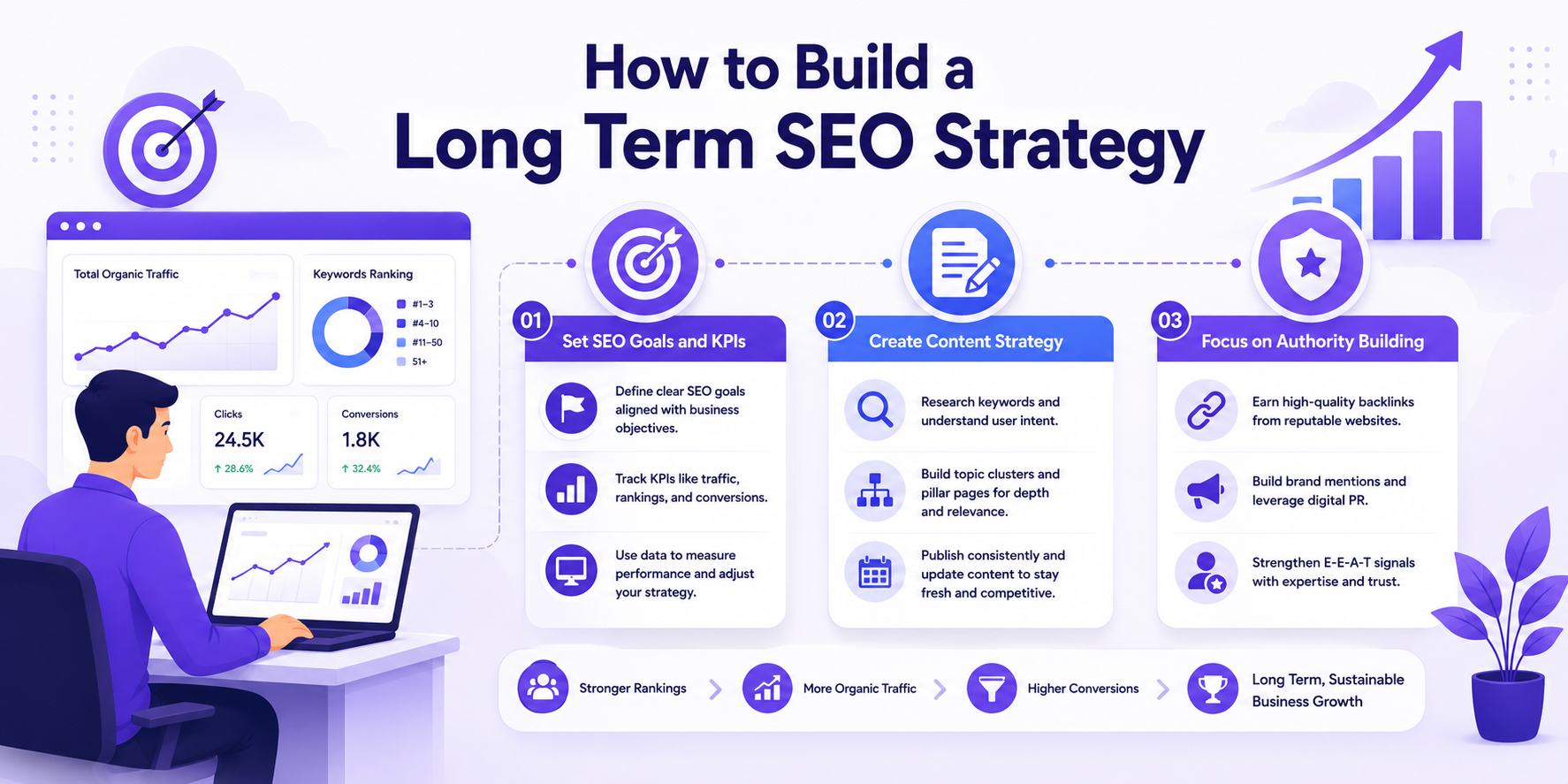
Set SEO Goals and KPIs
A long term SEO strategy starts with clear goals and measurable KPIs. You need to define what success looks like, whether it is higher keyword rankings, increased organic traffic, or better conversion rates. Align these SEO objectives with your overall business goals so every effort supports real growth and ROI.
Track performance using tools like Google Analytics (opens in new tab) and Google Search Console (opens in new tab). Monitor metrics such as traffic, rankings, and engagement to understand what works. Regular tracking allows you to adjust your strategy and stay on course.
Create Content Strategy
Content strategy is the core of sustainable SEO growth. Focus on creating high quality, relevant content that matches user intent and answers real questions. Use keyword research to build topic clusters and pillar pages that cover a subject in depth and improve topical authority.
Plan a consistent publishing schedule and prioritize evergreen content that stays relevant over time. Update existing pages to keep them fresh and competitive. This approach helps your website rank better and attract steady organic traffic.
Focus on Authority Building
Authority building strengthens your website’s trust and credibility in the eyes of search engines. This includes earning high quality backlinks, building brand mentions, and establishing strong E E A T signals through expertise and reliable content.
Use link building, digital PR, and outreach strategies to gain references from reputable websites. Over time, this improves domain authority and helps your pages rank higher. A strong authority profile ensures your SEO efforts deliver long term, compounding results.
FAQs About SEO Step-by-Step Process
Conclusion: Master SEO Step by Step for Long-Term Growth
SEO is not a one time task. It is a continuous process of improving your website, content, and strategy to match how people search and how search engines evolve. When you understand the basics of search engine optimization and apply them consistently, you create a strong foundation for long term organic growth. Even small improvements in content quality, technical performance, and user experience can lead to meaningful increases in search traffic over time.
The key is to follow a step by step approach and focus on what truly matters. Learn how search works, create content that solves real problems, and build authority through trust and relevance. If you stay consistent and adapt to changes in platforms like Google, you can compete effectively without relying heavily on paid ads. SEO rewards patience, effort, and clarity.
If you are serious about improving your results, continue learning from trusted resources like Moz and explore structured guides such as the Beginner’s Guide to SEO. Take action, test what you learn, and refine your strategy over time. This practical approach will help you turn SEO knowledge into real, measurable business growth.
Muhammad Yousaf
Jam SEO Agency
Leads JamSEO Agency vision, growth, and client success through data driven SEO and digital strategy.